Because it is experienced, at least part of the spirit resides in our bodies. When one has a spiritual experience, it is such because one’s physiology is engaged. In other words, spirit is something a human body does. Quite likely, other animal bodies do it too.
One’s spirit is engaged in a variety of ways. Falling in love, going to a large, well done concert or sporting event, listening to a compelling speaker, church, and solitude are a variety of ways people report their spirit being engaged.
Spirit makes meaning. Spirit motivates. Spirit heals.
There are many different ways one cares for one’s self in the sense of maintenance and to maintain readiness. One may saves for retirement, follow an exercise regime, sing in a choir, floss and brush one’s teeth, drink eight cups of water per day, etc. One may exercise one’s spirit.
At my high school, we had to gather at assemblies and practice our cheers while a band played. One of those cheers was, “We have spirit, yes we do! We have spirit, how about you!”. The combination of live music and coordinated, almost liturgical, group reaffirmation of values was a moving experience and deeply shaped the culture of student’s experience. At sports games we were a spiritual community engaged in direct action. For what more could any human being ask?
My high school was smart. To stoke the human spirit motivates them, makes them open to input. A human spirit, just like the mind and the body, is a dangerous thing to blindly put in the control of another individual. Each of us is responsible for our spiritual lives as we are for all the other aspects for which we care. Here’s what tantalizes me…..
There is a story in the Bible of an up and coming prophet asking God for double the spirit of Elijah (2 Kings 2:9)**. What would I do with more spirit than I have right now? What would that experience be like? If many of the world’s stories are true, it is like becoming content, being provided for by Nature and work, and serving one’s true fulfilling role. A spiritual life bringing this about is possible because,
Spirit makes meaning. Spirit motivates. Spirit heals.
May we each have the strength to take it up tomorrow. If you don’t know how, please ask.
*To speak of, or write about, the spirit is foolishness. The spirit cannot be captured in the metaphor of language.
Time is our one, truly unrenewable resource. Times of stress and other factors drastically alter one’s sense of time. In this pandemic, many people have expressed difficulty tracking time and finding meaning and productivity within all of the time they’d like. Days seem to slip by. Weeks sometimes vanish and one wanders what one did with them.
As a priest, I pay special attention to time. Chief among the ways priests dwell in and work with time is through sacrament (baptism, communion, marriage, reconciliation, etc.). We use sacrament as a way to puncture time. For example, when we celebrate the Eucharist, we are closer to the event of the crucifixion of Christ than we were yesterday. Sacrament imbues time
Baptism is an ancient sacrament by which people are inducted into the cult of Christ worship known broadly as Christianity. We don’t know when the practice started. It seems to be a spin off of ritual bathing and cleansing done for priests in the Hebrew Scriptures. Baptism was taking place before the ministry of Jesus Christ. Quite famously in the story, Jesus is baptized himself, although never baptized anyone. It seems that he instructed his followers to borrow this act to spread their new cult or group.
People have also ritually washed objects as well as themselves (Num 8:5-7, Exo 19:14). This is especially the case for objects considered used in God’s service such as garments and dishes. Two things change when an object has been ritually washed. The story of the object has been set (this is an object used in the service of the Lord) and it has been functionally prepared to serve that purpose. This can be true with painting a house.
Baptism historically has involved getting very wet, possibly being held under water for uncomfortable periods of time. Certain promises are made, prayers are prayed, and the soul/mind/body, the full person, is meant to be liberated to embark on a path of divine proportion. In many ways, this is similar to inductions on many life journeys. Much like being circumcised, the inauguration of a president, or becoming a member of the armed forces, these journeys start with a ritualized set of promises to inform and a show of submission to natural elements (water, the edge of a knife, human violence) to ‘seal the deal’.
What changes, though? After the bath that is baptism, or the violence of initiation into the military? Primarily, the story we and others tell about one’s self changes. This change is powerful.
Add to that power when the ritual is something that is also life-giving such as bathing (baptism) or eating/drinking (communion). Now the ritual has the opportunity to infect our consciousness. The military uses violence to train people toward violence. This is on purpose, so that when in a violent situation, one’s mind will recall and enact their training. People of good faith do the same thing on the other side of the divide. We train for peace and reconciliation and we use common healthy symbols like washing and eating so that when we do these things, our training kicks in. Our training is for peace.
We do this for ourselves, why not for the other tasks that help us sustain land, labor, or lodging. Taking the garbage out is like going to confession. Each meal is like communion. Even painting a house can be like baptizing and confirming it.
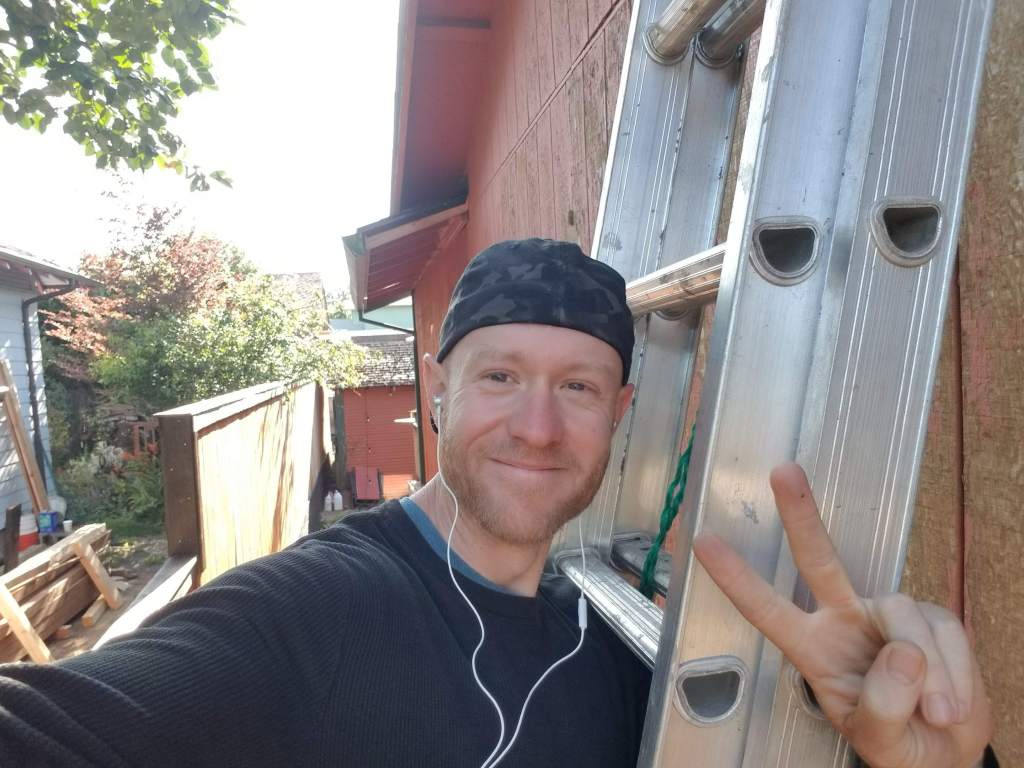
The pressure washing is like baptism. The repair and reseal of the house like the training and reflection preparing for confirmation. The paint is like being sealed with holy oil. After being ritually painted with this intention, a house and the people associated with it are ready to embark on their sacred adventure of providing physical shelter and spiritual home.
Some people may say it’s inappropriate to think of a pressure washer discharging a sacrament. I say we have been using human-crafted tools to help us administer the sacraments for some time. Some people may say that I am being too flippant with the sacraments of the Church. I say that, unless sacraments provide observable change and can be applied universally in my life, they are worthless.
Instead, there is power in allowing sacrament to touch and inform all that we do. A moment filled with curiosity and purpose is an eternal moment. An object with a clear purpose is a tool well used. Sensing ritual in the labor of life also brings us into the present, giving us more agency within our time.
Each one baptized is inducted into priesthood (1 Peter 2:5-9). Let us find and imbue each task and moment with a sacred purpose, and step into the eternal.
If we’re going to baptize a baby, why not baptize a house. Neither is able to make any decisions on their own. Both can be initiated into a purpose-directed life. Both are ultimately tools in God’s purpose.
Some people may think it silly. Others may say this idea is heretical. I say we can approach many tasks in life with a heart of ritual inflecting toward God’s justice, joy, and liberation. Claiming one’s identity as a priest, even painting a house can be a sacrament. Any of us who care about peace in the world must first foster it in our personal lives. One can start today.
Remember the baptismal promises when drinking water.
Think on and repent from the footprint we leave while taking out the trash.
Read or call to mind Jesus’ washing the disciples’ feet while doing dishes
What can be infused with ritual in your life? Are you baptizing the dishes? Is your cup of morning tea or coffee life communion wine? Let us each make and embrace the tiniest of rituals to find lie-giving Spirit in what we do. There, in that life-giving ritual, is the power of God.
What is happening when someone sees a vision or dreams a dream? To be sure, many are the times that a cunning person has beguiled the simple yet earnest person by ascribing dubious actions to a vision or dream without basis. We must hold, however that some visions and dreams are a real experience on behalf of the seer. In these cases, what is happening must be able to be understood as a natural phenomena. In these dreams and visions we observe archetypes that exist both in our personal unconscious as well as resonate with a global “collective” unconscious. Many make the case that by exploring our dreams and visions (our personal mythology), along with analyzing global mythology, a mythological pattern emerges that describes the human journey aligned with Nature. The story of Jesus Christ fits within this pattern making Christianity a retelling of an history-old story of human struggle and triumph rather than a unique, original tale.
The world of the unconscious (dreams, visions, fits of rage, etc.) has long been a mystery and controlling factor for humans. In ancient near east literature, the chaos of water is used to symbolize and describe the terrible monsters, surprise storms, and general dangers of sailing past the horizon, into the human unconscious. We can look to stories of the flood, or even to the Disney movie Moana, wherein the received wisdom of the tribe is to not journey into the sea for salvation because the risks is simply far too high, even with crop failure in progress.
For much of early psychology, the unconscious was viewed as a sort of attic where unwanted, dusty odds and ends were collected and then came our in our dreams. It’s not until the work of Carl Jung that similarities and patterns are documented between the unconscious of different people. Jung puts forward the idea that all unconsciouses are connected into a collective unconscious (1). This collective unconscious is made of the hearts and dreams of each of us, in the same way a wave in the ocean is made of many molecules of water, which individually may not even be aware they are part of a wave. Many of us living through COVID and political upheaval may find the idea of a collective unconscious to sound very practical.
It is postulated that within this unconscious lives archetypes. These archetypes are essential information for our individual and collective survival that take the shape of hero, villain, warrior, lover, etc. Nietzsche supposes that “in our sleep and in our dreams we pass through the whole thought of earlier humanity” by encountering the wisdom of our ancestors in archetype (2). Boas postulates that our shared archetypes lead to common characteristics and values that are “the same all over the world” (3). Freud attests that “this symbolism is not peculiar to dreams, but is characteristic of unconscious ideation, in particular among the people, and it is to be found in folklore, and in popular myths, legends, linguistic idioms, proverbial wisdom, and current jokes…” (4). Carl Jung goes the farthest to state directly, “archetypes are the unconscious images of [human] instinct itself.” They are “patterns of instinctual behavior” passed on by our ancestors that we are compelled to act out for our survival (5).
A standard journey for the hero to make is some variation of seperation-initiation-return (6). It goes like this: A hero is called upon a journey from the realm of mere mortals and becomes a spectacle of greatness evidenced by bestowing grace, sustenance/healing, or Spirit.
This spectacle sets up a conflict with the forces of chaos and darkness. This conflict is the initiation to a transcendent reality. Once initiated, the hero then returns ‘home’ with power to bestow to others.
Christianity is a cult based on the historical Jesus of Nazareth who was elevated to the title Jesus Christ. Christ means the source of life, or the umbilical spot wherein the Great Spirit flows into the material or human world. Christ had difficulty tolerating the world, and the world him, setting up the ultimate conflict of his crucifixion. The crucifixion serves only as an invitation, however, as Christ comes back ready to bestow the Holy Spirit on his followers.
This is called ‘The Greatest Story Ever Told’. Consider the similarities between Christ and Odysseus. Odysseus leaves on a journey from the Trojan war, where he had been separated from his family and proved his mettle. On his journey home, many challenges are faced from disobedient crew, to seductive women, to monsters. Having been initated through the trials of his journey, Odysseus returns home to share his justice and rule by evicting uninvited suitors and the spoils of his journey.
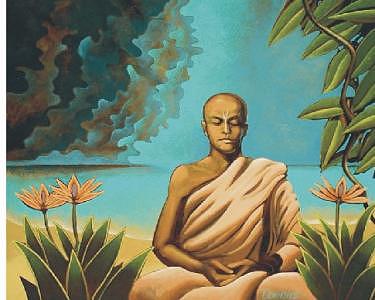
Or, consider the story Gautama Buddha. Seeing the suffering of the world he leaves his royal palace and retires from the world (separation). While living as an ascetic monk he faces many hardships of fasting and submission to the elements (initiation). When he had reached the end of his searching through initiation and sits under the bhoddi tree he attains enlightenment and becomes a bodhisattva, the living Buddha who shares enlightenment with all living creatures.
The settings are different. The values espoused vary slightly due to culture. the arch and purpose of the journey seems the same. In the stories of Abraham/Sarah, Moses, Christ, Mohamed, Odysseus, Buddha, Odin and Baldr, and many others, we see this story play out always in an exciting way, always the same story. These stories, and many others not mentioned here, illustrate a larger ‘monolith’ articulated by nearly every culture for which we have a record. This arch and reality has implications for the Christian enterprise and our personal journey.
The cult of Christianity can no longer claim an original or exclusive message. Any truth in Christianity must have been accessible before Christ and in other cultures. Indeed, it was never Christ who made this claim of exclusivity, rather his followers after his death. Instead, Jesus speaks of many flocks (John 10:16) and is often empowering people who are not his disciples (Luke 10). The Church is attempting to be the gatekeeper to a state (heaven) that has not gates or walls. As such, she is acting as a block for people on their way to enlightenment. As Lao Tzu (38) reminds us,
Lose the Way, and virtue follows;
lose virtue, and compassion follows,
lose compassion, justice follows;
lose justice, and propriety follows
Propriety makes a veneer of loyalty and sincerity, and discord sets in.
You are the one who must live with your journey. No organization or institution bears responsibility for your soul. The wisdom of human archetypes lives in you. The goal is to uncover it, rather than instill it. Uncover this wisdom with friends, the people who care about you without external incentive. Subscribe to this blog to be plugged into a community of people uncovering and living into the truths of our shared wisdom. You already have it within you.
***
(1) Jung. Psychology and Religion, par. 89.
(2) Friedrich Nietzsche, Human, All To Human, vol. I, p.13.
(3) Franz Boas, The Mind of Primitive Man (1911), pp. 104, 155, 228.
(4) Sigmund Freud, The Interpretation of Dreams, translated by James Strachey, Standard Edition, V, pp. 350-51.
(5) Jung, The Collected Works, Vol. 9 Part 1, Trans. by R.F.C. Hull, (2014), p. 44.
(6)Joseph Campbell, The Hero with a Thousand Faces, (2008), p. 23.
I’d like to weave the narrative that I live in a community of people mutually supporting each other and the common good through listening, growth, and stability. In short, I’d like to live a re-imagined monastic life.
Monasticism is a global phenomena having arisen independently on virtually every continent. What I mean here when I reference ‘monasticism’ isn’t so much the canonical boundaries, or the outfits, or the letters that can come after one’s name. Here I am talking about the act of ‘standing alone before God’ as the primary mode in which one understands themselves. This is important because it is the standing alone before God that no one can take away. That experience is what all human beings have in common. This reality compels the monastic to take reasonable action, such as prayer, study, and work, to respond to and prepare for the experience of standing alone before God.
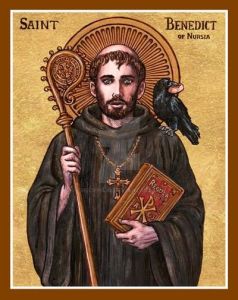
In many traditions, monasticism is not the activity exclusively of hermits, but of communities of people. For example, we know that Benedict’s monastery had children and adults with developmental disabilities. Many Budhist monasteries have children present. A very many expressions of monastic life happen in community. All of the same dynamics, hazards, intractable frustrations, joys, and faults come into play in any community setting. Community is, necessarily, family.
I define monastic life as intentionally differentiated family life. This a way of ordering one’s self and one’s priorities. One can be a monastic and be placed in all sorts of situations: family, leadership, dish-washing, raising children. This monastic life is both a removal from the life of the world and it is plunging into the heart of the world. Someone with the priorities of maintaining a balanced inner/outer life may not nearly as often advance the corporate ranks. A person who stewards possessions and eschews ownership will not be motivated by a pay raise.
I look out my window and see a world that is in pain. Many people I know experience more isolation than they feel is healthy. Many people are depressed or anxious…. or both. Institutions are weakening and ways of life seem to be changing. The way forward for an American consumer or professional seems fraught. The identity of ‘consumer’ is especially pernicious in the United States. People are free to choose everything from their food to their toilet paper. We all get to choose who we are with, how we will spend our time, and what we will own. We are each subjected to a steady stream of propaganda to compelling us to consume with the resources of artificial intelligence and the data we give it about ourselves.
Meanwhile, this consumption comes at a true cost to other people and the planet itself. Many say that they want the inequity and exploitation of people and planet to end but aren’t able to end their own personal behaviors that are unsustainable in the aggregate. It can seem to the honest observer that one must participate in the sins of the world to survive the vagaries of the world. This is no way to live.
I have been betrayed by institutions, both civil and religious. I see good people attempting to build power, a power that is to be used for cleaning up the messes we’ve made. Sadly, the power built seems to be rooted in and beholden to the systems and ways that created the messes in the first place.
A monastic heart and practice may be a path forward away from the status quo and toward a new and abundant life. Benedict of Nursia, a powerful monk from 1500 years ago, invited his readers to ‘Listen…… place the ear of your heart on the solid ground of the Master’s wisdom.” Equipping myself with the best resources available to serve my Master in nature and the others around me is my desire because it sounds like the most fulfilling way to live. This narrative of listening and growing in stability is the narrative I desire for myself, and one I hope to embody.
Time is of the essence. Time is money. Almost everyone I know is paid by the hour, day, month, or year. Even those who aren’t, who are paid by the project, can often readily compute their estimated hourly wage. Almost in a way of checking to see if they are holding their place in the market.
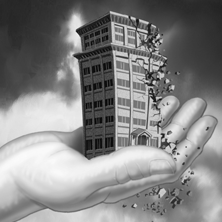
Finance-based Capitalism requires a distorted understanding of time to function. Theologian Katheryn Tanner makes the case that leveraging at the corporate and personal level propels one into a collapsing of time where an ever increasing percentage of one’s actions are determined by past decisions. This collapsed time requires “via indebtedness an unbreakable continuity with one’s past self” (Tanner, pg. 31). This orientation to the past shows up in the way wages are calculated, often being based upon decisions in the past (such as what schools attended, geographic location, etc.) rather than the present work being done.
This collapse of time violates the way Stoic emperor/philosopher, Marcus Aurelius understands the matter. Contrary to our present being controlled by decisions in the past he proclaims, “the sole thing of which anyone can be deprived is the present, since this is all one owns” (Meditations 2:14). The Roman Empire was certainly a brutal place. It’s hard to imagine it a place where nearly every person was in a race to raise and leverage themselves simply to stay afloat.
Jesus of Nazareth talks about life in all four canonical gospels. In John’s gospel, however, he adds a significant qualifier: eternal. In his final prayer (John 17) Jesus claims that his disciples have the ability to “give eternal life” to people. Then Jesus defines eternal life: it is when one’s vitality is in never-ending supply. What’s more crazy, this eternal life happens when someone imitates God to the extent that it is difficult to tell the difference between God and the person acting like God.
That acting is paradoxical. That which looks strong is often weak. That which looks foolish is often intelligent. “One who is filled with virtue”, Lao Tzu says,”is like a baby. Bees, scorpions serpents, and snakes won’t sting her. Wild animals won’t attack him. Birds will not stroke them. Bones weak, muscles soft, yet the grasp is firm”. This is to say that the strength of God, or the virtue of the Way, is demonstrated by harmony with nature, eschewing a worldly or social power. Lao Tzu finishes this idea by saying, “Knowing harmony is called eternal, Knowing the everlasting is called enlightenment. Increasing one’s vitality is called a blessing”.
Anyone who has business to accomplish or people for whom they need to care could use more vitality and clarity.How does one begin putting these ideas into practice? One possibility is for people of faith is to look to monastic practices to help form our identity and give us the strength and connection to the Divine we need. In a previous post on monasticism I outlined some of the global features of this identity. I say features because specific practices vary from region to region while the identity remains recognizable. Monastic living and identity is a way to reform one’s self away from that of consumer. The identity of professional/consumer cannot last. It is unsustainable.
Whether through a monastic or some other identity and practice, eternal life is possible. The ancients tell us it may very well be hiding in plain sight. Let us examine our lives and hearts to leave behind that which no longer leads us to life. Give up what you have, and follow Christ.
Repentance is a uniquely difficult pill to swallow. It is not absolution, contrition, remorse, guilt, conversion, rehabilitation, reformation, or responsibility. It is, however, closely related to all of these. Repentance is a verb describing the reorientations of the desires of one’s heart in a way that actions are expected to follow. Repentance is the learning of a lesson. Repentance facilitates healing. Repentance sits at the root of wisdom and is the first word out of Peters mouth when asked what to do in a moment of crisis (Acts 2:38).
This is a worthy topic of conversation and thought because the adults of planet Earth face challenges that threaten the survival of our species and the stewardship of the great treasures our ancestors have passed on in collected wisdom and knowledge. Repentance is worth talking about because I rarely hear it spoken of in public, let alone taught , even though repentance is mention over 100 times in the bible. Many other sacred texts such as the Quran and Sutras make reference to repentance as a best practice toward enlightenment and life.
Shortly after Christianity was declared the official state religion by Emperor Constantine (337 CE) a group of earnest people moved out of the city into the desert. There, they wanted to heal from the injuries, habits, and harms that the society of Empire had inflicted upon the soul. They desired to live an authentic life harming no one, making no profit, and fulfilling their role in the ecosystem. There’s were often lives of repentance and they were happy.
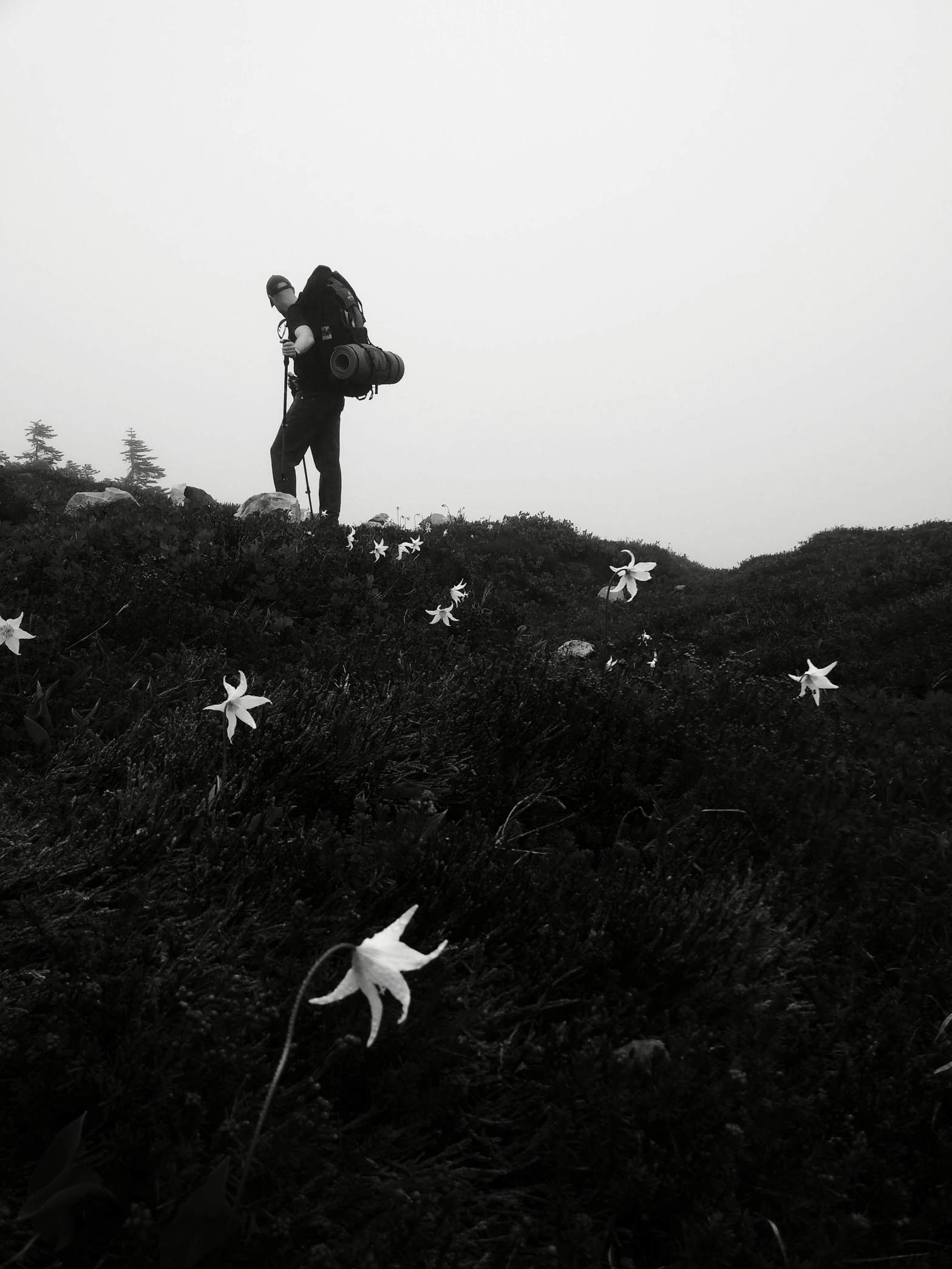
I recently spent three nights in the Siuslaw National Forest, part of the central Coast Range in Oregon. Sitting between the Willamette Valley and Pacific Ocean, the Coast Range is 58 million years older than their taller cousins, the Cascades. Though the Siuslaw’s humble hills are now primarily used for timber, they were once much taller peaks where dinosaurs could have roamed. I booked no camp ground and, instead, decided to dispersed camp, maximizing solitude and uncertainty. I became acquainted with many of the creatures living in the forest: elk, rabbits, osprey, and people who seem to be permanently camping. I experienced the acres and acres where a once noble and ancient forest has been scraped away giving the Siuslaw the appearance of mange.
As I sat in those ancient hills I felt the wonderful pin-pricks of contrition. I come from a timber state (Idaho) and have many relatives who have made their living in that industry. My own home in Portland is made of timber. I know that I have partially financed and benefited from the very thing inspiring my contrition. Still, I allow my heart to break. I can see that my way of life must change, then our way of life must change. It cannot go the other way around.
For some coming out of an evangelical or charismatic faith background, repentance has been used as a weapon, a never-ending hamster wheel of trying to be ‘good enough’. Let us redeem repentance and find a place for it…. especially for any of us living a life of relative privilege due to race, class, gender, or geography repentance may be the only path of life.
May our spirit and soul be agile, that we can each demonstrate an ability to repent of which the world must take note.
Above all, what made Mary Magdalene significant for the early Church and the Middle Ages was the warm and vivid image of the beautiful and sinful woman repenting in tears and learning the secrets of the heart of God by her silent receptivity before the mystery of Love. -Benedicta Ward, SLG
July 22nd is a day set aside to remember a character from the Gospels, Mary Magdalene. This Mary is a complex and historically misunderstood figure who serves as a linchpin for the saving drama of God. Ours is the time when her values and deeply grounded action are needed in our personal and institutional lives.
While it is old news to many, it will not hurt to clear away the common misunderstanding around Mary Magdalene. She is regularly confused with Mary of Bethany (sister to Martha and Lazarus) and with variety of ‘sinful’ women. As a result of this confusion, Mary Magdalene has an historical reputation of being a sex worker. We have no biblical evidence for such claims. Part of this confusion is because the gospels have so many characters named Mary. Another reason is that many women in the gospels have been compiled into a composite mythological character.
Here is what we know about Mary from the Bible
Jesus cast seven demons from her (Luke 8:2)
She was present at the crucifixion of Christ (Matt 27:55-56, Mark 15:40, Luke 23:49, John 19:25)
She was present at the burial of Christ (Mark 16:1)
She and others went to the tomb on Easter morning (Matt 28:5-8, Mark 16:6-7, John 20:1-10)
She told the disciples of the Resurrection (John 20:11-18)
Mary is a person who has been healed and becomes a disciple of Christ. Her ability to be vulnerable and open display her courageous heart. That courage is on display again as she helps anoint Christ’s body and goes to his tomb when the male disciples were not comfortable doing so. Mary gets the job done repenting, healing, and tending to the dead Jesus all while never arguing about who is in charge (Luke 9:46).
Mary Magdalene is a model for anyone wishing to follow Christ. For the gospel writers and hundreds of years afterwards, Mary was not only an historical figure but plays the role of Eve in the gospels, “the first sign of the reversal of the fall of Adam”. Her inner strength and tenacity balanced with her vulnerability inspire strength and growth for anyone. Here is a prayer to take through today……
God our guide, thank you for Mary Magdalene. Through her tears and toughness, she helped power the movement of Christ through the world. Help me heal as she healed. Give me her ability to show up, that I may follow Christ through the cross to Resurrection. Amen!
I want to live in a community of people mutually supporting each other and the common good through listening, growth, and stability. In short, I’d like to live a re-imagined monastic life.
Monasticism is a global phenomena having arisen independently on virtually every continent. What I mean here when I reference ‘monasticism’ isn’t so much the canonical boundaries, or the outfits, or the letters that can come after one’s name. Here I am talking about the act of ‘standing alone before God’ as the primary mode in which one understands themselves. This is important because it is the standing alone before God that no one can take away. That experience is what all human beings have in common. This reality compels the monastic to take reasonable action, such as prayer, study, and work, to respond to and prepare for the experience of standing alone before God.
In many traditions, monasticism is not the activity exclusively of hermits, but of communities of people. For example, we know that Benedict’s monastery had children and adults with developmental disabilities. Many Budhist monasteries have children present. A very many expressions of monastic life happen in community. All of the same dynamics, hazards, intractable frustrations, joys, and faults come into play in any community setting. Community is, necessarily, family.
I define monastic life as intentionally differentiated family life. This a way of ordering one’s self and one’s priorities. One can be a monastic and be placed in all sorts of situations: family, leadership, dish-washing, raising children. This monastic life is both a removal from the life of the world and it is plunging into the heart of the world. Someone with the priorities of maintaining a balanced inner/outer life may not nearly as often advance the corporate ranks. A person who stewards possessions and eschews ownership will not be motivated by a pay raise.
***
I look out my window and see a world that is in pain. Many people I know experience more isolation than they feel is healthy. Many people are depressed or anxious…. or both. Institutions are weakening and ways of life seem to be changing. The way forward for an American consumer or professional seems fraught. The identity of ‘consumer’ is especially pernicious in the United States.
People are free to choose everything from their food to their toilet paper. We all get to choose who we are with, how we will spend our time, and what we will own. We are each subjected to a steady stream of propaganda to compelling us to consume with the resources of artificial intelligence and the data we give it about ourselves.
Meanwhile, this consumption comes at a true cost to other people and the planet itself. Many say that they want the inequity and exploitation of people and planet to end but aren’t able to end their own personal behaviors that are unsustainable in the aggregate. It can seem to the honest observer that one must participate in the sins of the world to survive the vagaries of the world. This is no way to live.
I have been betrayed by institutions, both civil and religious. I see good people attempting to build power, a power that is to be used for cleaning up the messes we’ve made. Sadly, the power built seems to be rooted in and beholden to the systems and ways that created the messes in the first place.
A monastic heart and practice may be a path forward away from the status quo and toward a new and abundant life. Benedict of Nursia, a powerful Christian monk from 1500 years ago, invited his readers to ‘Listen…… place the ear of your heart on the solid ground of the Master’s wisdom.” Equipping myself with the best resources available to serve my Master in nature and the others around me is my desire because it sounds like the most fulfilling way to live. This narrative of listening and growing in stability is the narrative I desire for myself, and one I hope to embody.
A life that gives life is possible. It only costs a reorientation of the heart. Let’s not delay, but run toward the abundant life waiting for us!
The book of Acts describes the actions of the people who had personally known Jesus, and their associates, after the Ascension. This group of people starts off as a small, mystical, economically diverse Jewish sect based in Jerusalem and the surrounding region keeping pretty much to where Jesus of Nazareth had traveled.
Then Paul shows up. Paul is this captivating character who is not really named Paul, but Saul. He’s a little bit of a book worm. Very smart. He speaks multiple languages, is a practiced in law and letters, and a life-long bachelor. He’s also a turn-coat. He switched onto the Christian team after a mystical, woo-woo, life-changing experience on the road (Acts 9). Saul then says he is ‘Paul’ and claims to also know Jesus Christ personally. The folks who ‘actually knew’ Jesus of Nazareth aren’t so sure. Paul is a controversial figure and some people want to kill him.
Paul takes his show on the road, dirt-bag style. He gives up his law practice (Acts 13:1-3) and travels doing day labor (Acts 18:1-3, Acts 20:33-35, Phil 4:14-16) and organizing diverse spiritual communities in a bunch of different cities in the Eastern Roman Empire. In many cities to which Paul travels, there is some sort of riot or incident (Acts 16:16-40, 17:1-9, 18:1-17, 19:21-41, 20:23). Eventually, Paul is moved by the Spirit to return to Jerusalem. He wants to be there by next Pentecost to celebrate with his Christian friends (Acts 20:16). Paul’s arrival in Jerusalem sets off a chain of events that brings him into contact with the regional and then global political authorities where he is able to share his message of life in Christ and make a compelling case for a new world order. He is ultimately put to death, but not before he helped transform Christianity from a localized club to an empire-wide phenomenon. The arch of Paul’s journey to Jerusalem and meeting his eventual death has strong echos of Elijah meeting the chariot of fire (II Kings 2) and Jesus walking toward his death once he set his face toward Jerusalem (Luke 9:51, Mark 10:32).
Here is the thing. All along the way home, God’s prophets and others filled with the Spirit tell him to avoid Jerusalem (Acts 21:1-12). It’s quite explicit and seems to read as a warning from God. Is the author of Acts trying to say that Paul walked into his death when it could have been avoided, when God was trying to warn Paul? Or is the message that we each must follow our own heart, complete our own story, even when it may seem ill advised to others? Or does the bible admit that clearly hearing from God is a messier process that it may sometimes seem?
Post what you think, or what you would do in Paul’s shoes below!
Think about your unconscious dialogue. You know, that little voice that’s like a running commentary and supervisor over what you’re doing. Sometimes we call that executive function. I think it can be something more primal. That voice determines Who You Are. It dictates actions and sets values. In the way a river carves its own bed, slowly over time, ideas and aesthetics we consume shape our mind and our heart. They mold the unconscious dialogue. No isolated event, outside of the deeply traumatic, alters who this voice is or what, in essence, it is saying.
What is God? A phenomena that is globally experienced through history is difficult to write off. The androcentric model (old-man-in-the-sky-God) is quickly losing steam and market share. It could be said that God is a synaptic pattern that has been re enforced through time by telling the God story. God could also be a process, or a force of nature. Whatever God is, there seems to be a component of that being that becomes incorporated into our own (1).
The daily office is a way of shaping who and what I am. It’s a way of shaping and molding my inner dialogue to conform to the character and values of the god of the Bible. It is a powerful tool and it’s meant to be used over a long period of time. The Daily Office sets a bedrock in the soul upon which practices of meditation, contemplation, and exploration find solid foundation.
The Daily Office is a way of praying started by early Christian monastics in the 4th century CE. Through the centuries it has been passed down by seekers and monastics often practiced in community. Although many practices differ, daily office is usually a combination of scripture or sacred reading, song, prayer, and silence historically done in a corporate setting.
Christ lives in my heart. I want to be in the light (2) and have it shine through me, like I’m a prism. Christ can shine through the prisms of you and me just like Christ shone through the prisms that were Jesus of Nazareth and his mom, Mary. Someone is the “Bible character” of today. It’s you. In fact, you’ve already been practicing the skills that make you so. Your experiences and choices have given you the tools to be and survive where you are now. The presence of love and creativity is the wind aft your back. I’ve told you a way I hoist my sail. What are yours?
***
Islam has Dhikr, the remembrance of God and Christianity has Jesus or God living in the heart (Eph. 3:17). Eastern thought has life energy (chi) flowing through the body, sometimes at focal points called chakra.






 Theologian Katheryn Tanner makes the case that leveraging at the corporate and personal level propels one into a collapsing of time where an ever increasing percentage of one’s actions are determined by past
  In his final prayer (John 17) Jesus claims that his disciples have the ability to “give eternal life” to people. Then Jesus defines eternal life: it is when one’s vitality is in never-ending supply. What’s more crazy, this eternal life happens when someone imitates God to the extent that it is difficult to tell the difference between God and the person acting like God.
 consumer. The identity of professional/consumer cannot last. It is unsustainable.
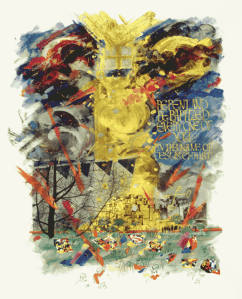 Repentance is the learning of a lesson. Repentance facilitates healing. Repentance sits at the root of wisdom and is the first word out of Peters mouth when asked what to do in a moment of crisis (Acts 2:38).
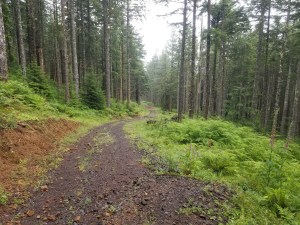 Sitting between the Willamette Valley and Pacific Ocean, the Coast Range is 58 million years older than their taller cousins, the Cascades. Though the Siuslaw’s humble hills are now primarily used for timber, they were once much taller peaks where dinosaurs could have roamed. I booked no camp ground and, instead, decided to dispersed camp, maximizing solitude and uncertainty. I became acquainted with many of the creatures living in the forest: elk, rabbits, osprey, and people who seem to be permanently camping. I experienced the acres and acres where a once noble and ancient forest has been scraped away giving the Siuslaw the appearance of mange.
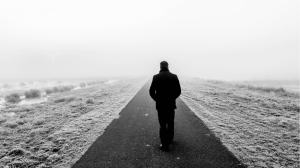 charismatic faith background, repentance has been used as a weapon, a never-ending hamster wheel of trying to be ‘good enough’. Let us redeem repentance and find a place for it…. especially for any of us living a life of relative privilege due to race, class, gender, or geography repentance may be the only path of life.
 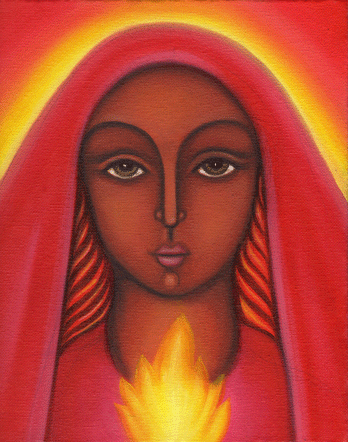 She is regularly confused with Mary of Bethany (sister to Martha and Lazarus) and with variety of ‘sinful’ women. As a result of this confusion, Mary Magdalene has an historical reputation of being a sex worker. We have no biblical evidence for such claims. Part of this confusion is because the gospels have so many characters named Mary. Another reason is that many women in the gospels have been compiled into a composite mythological character.
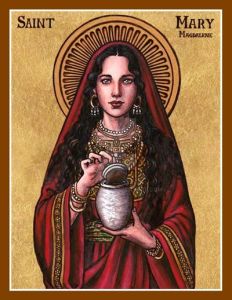 for anyone wishing to follow Christ. For the gospel writers and hundreds of years afterwards, Mary was not only an historical figure but plays the role of Eve in the gospels, “the first sign of the reversal of the fall of Adam”. Her inner strength and tenacity balanced with her vulnerability inspire strength and growth for anyone. Here is a prayer to take through today……
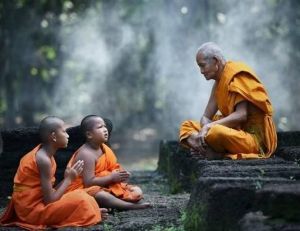 For example, we know that Benedict’s monastery had children and adults with developmental disabilities. Many Budhist monasteries have children present. A very many expressions of monastic life happen in community. All of the same dynamics, hazards, intractable frustrations, joys, and faults come into play in any community setting. Community is, necessarily, family.
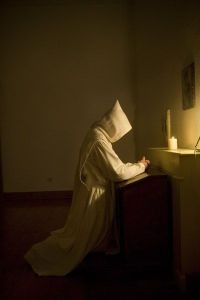 Benedict of Nursia, a powerful Christian monk from 1500 years ago, invited his readers to ‘Listen…… place the ear of your heart on the solid ground of the Master’s wisdom.” Equipping myself with the best resources available to serve my Master in nature and the others around me is my desire because it sounds like the most fulfilling way to live. This narrative of listening and growing in stability is the narrative I desire for myself, and one I hope to embody.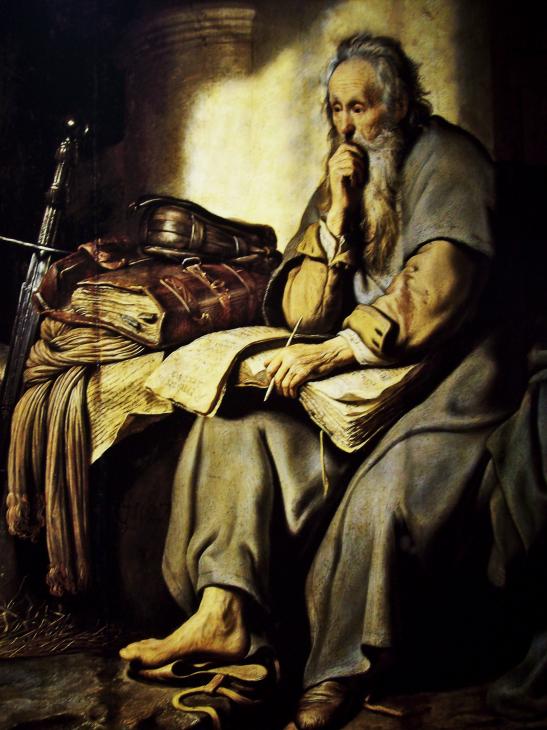
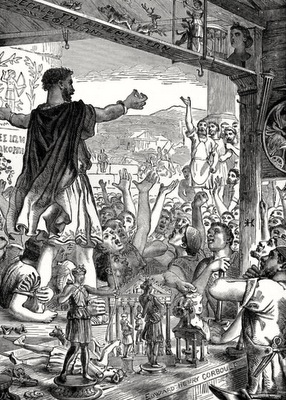 onto the Christian team after a mystical, woo-woo, life-changing experience on the road (Acts 9). Saul then says he is ‘Paul’ and claims to also know Jesus Christ personally. The folks who ‘actually knew’ Jesus of Nazareth aren’t so sure. Paul is a controversial figure and some people want to kill him.
 God’s prophets and others filled with the Spirit tell him to avoid Jerusalem (Acts 21:1-12). It’s quite explicit and seems to read as a warning from God. Is the author of Acts trying to say that Paul walked into his death when it could have been avoided, when God was trying to warn Paul? Or is the message that we each must follow our own heart, complete our own story, even when it may seem ill advised to others? Or does the bible admit that clearly hearing from God is a messier process that it may sometimes seem?


