Speaking or writing about spirituality is foolishness. The moment words are used to describe the phenomenon, one is moving away from the experience. Spirituality is ineffable. And still….
Spirituality is a vital component of the human experience. An individual’s spirit is a key ingredient in action, from the heroic to the mundane.
Spirituality is a source of peace, inner strength, and integrity. Individuals use spiritual practices, such as silence, meditation, sacred readings, and other practices, to bring alignment to their body, mind, and soul. Buddhist monks, the Dalai Lama, and Thich Nhat Hanh, famously drew on their spirituality to resist and endure persecution. At the same time, Christian mystics Thomas Merton and Martin Luther King Jr. empowered them to create peace and justice. More to the point, many people know a grandparent, cousin, or family friend who has relied on spirituality to see them through a difficult season. Individually, each of us engages our personal spirituality somehow to get through the day.
I want to introduce you to another form of spirituality. Organizational spirituality (also called workplace spirituality) describes how spirituality and spiritual dynamics operate within a group. The group could be a family, a cultural or religious group, or a workplace. A simple example of organizational spirituality is the exuberance at a sports event. Organizational or workplace spirituality also occurs when a safe group of people fosters growth and healing.
The following series offers a fresh scientific look at workplace spirituality by synthesizing what researchers have already discovered and asking where the field is headed next. One area gaining attention is the role of decolonizing theory, which offers new ways to think about what spiritual integrity, belonging, and meaning can look like within a group.
By weaving together a wide range of studies, this project will highlight how scholars are beginning to envision a more decolonized approach to organizational spirituality, one that challenges old assumptions and creates space for diverse worldviews. Along the way, I will identify what we know, where the gaps are, and why those gaps matter. Ultimately, the goal is to point toward future directions for research and practice, especially for those working in human resource development, adult education, and organizational leadership. Understanding organizational spirituality in more expansive and inclusive ways can deepen our insight into organizational culture, employee well-being, and the possibilities for more just and grounded workplaces.
I expect a 600-word post on my organizational spirituality research to drop every week. Please follow along, share with a friend, and leave a comment.
Intro: Have you ever been in a situation that gets ugly? Maybe it’s a breakup, or a fight. A NASCAR wreck or classic Jerry Springer episode. When things get ugly they aren’t good, that’s for sure. They’re too compelling to be ‘bad’ in a traditional sense. Ugly is part of a different continuum than good-bad. Ugly belongs on a spectrum with beauty. In a perfect form, ugly provides the photo-negative of beauty. We’ve seen the good and the bad. Now it is time to see Church: the Ugly.
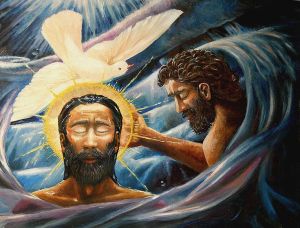
When John is baptizing by the Jordan, some Pharisees come to see him. They seem to be engaged in an argument regarding the source of authenticity. John is calling people to repentance and people are coming to him and confessing their sins, then undergoing a ritual bathing in the Jordan River (Matt 3:1-6). He indicates the source of authenticity is the inner drive toward repentance. Without his visitors even speaking, John contrasts the authenticity of his movement with the imagined argument of an appeal to authority as the sign of God’s Spirit and salvation (Matt 3:7-10). John’s prophecy about the end of their movement was partially correct. The temple was destroyed and the movement they persecuted became the world shaping Church. John advocates for God’s people being rooted in something more primal than organized religion: a personal interaction with the Spirit that leads to comprehensive balance. Religious power rooted in Empire will fall away.
The Apocalypse is a common element in many sacred stories. The Greek root of the word refers to an uncovering or a truth telling. For the last few millennia, that uncovering has been understood to entail also a destruction of the world as we know it. One could reasonably assume those who crafted most of the world’s religions understood that Deep Truth leads to the undoing of the human world as we know it. Sometimes it seems this has happened in a large way. The collapse of the Bronze Age, the genocide of the Indigenous Peoples of North America, and the Roman conquest of Gaul are a couple of examples of times where the world order collapsed for a large group of people. These sorts of times are uncertain, surprising, and often frightening.
Tears. Cry or grief feeling
Many of us have had a similar personal experience. A discovered affair reveals the ‘true state’ of a marriage. A job suddenly or unfairly ends and one discovers the parts of self that had atrophied under its weight. A sports team loses a game, or political party loses an election. One might wonder how could this happen, even though it happened honestly and must be reckoned with. This is an apocalypse. Faith, the love that powers it, and the hope that leads us on are three important tools for not only weathering the apocalypse but also making good use of it and rejoicing over it.
Where is the church in all this? The Christian faith has survived through a couple of apocalypses. Many in decision-making capacity feel it can weather this one in some form. As I have written about previously, the church has, for better and worse, crafted the world order we experience today. Outside of a few publicly nuanced stances, most religious organizations don’t say much different than one might expect to read in the New York Times, or hear on Fox News. Only the places where the Church has something unique to say or do will survive the next apocalypse. It will be ugly.
John’s Revelation (18:9-10) describes the kings of the earth who cry out at the apocalypse “Alas, alas, the great city, Babylon, the might city! For in one hour your judegment has come.” Theologian Wes Howard-Brook reinterprets the passage this way…
“Fallen, fallen is the global economy! For all peoples have drunk from its alluring cup, and the one percent have grown rich form the power of its luxury… And then I saw the corporate elite wailing and weeping, crying, “Also, our markets are no more!” And the banksters and their companions broke out in terrible lament, as all upon which they relied was no more… Alas, Amazon and Starbucks, Microsoft and Costco are no more! All the endless items available at a click will never be found again!” (pg. 297)
There are many material assets that embody the hopes and dreams of many generations that will be either given away or taken through attrition and corruption. I pray they are given to the inheritors of the great story of faith, regardless of their creed or affiliation. We are each a character in the story of Good Faith.
Sometimes a faith community is an amazing asset for weathering a personal apocalypse. Sometimes it is not all that one needs to grow through the trauma and crisis. Each of us can nurture the flame of our spirit. When it’s ugly out there and one is alone, they must be able to take responsibility, with God, for our own spiritual life and experience. When our church cannot provide all that we need, God will through grace. This may come in the form of a spiritual director, a good friend, or healing time spent in solitude.
This concludes a look at the Church: the good, the bad, and the ugly. Many great attributes of our world are because of the church. Much has happened in the name of the church antithetical to her stated mission. According to the Church’s own rhetoric, much of what currently composes the institution, the visible church, will fall away with the next apocalypse. What will survive is a remnant of people who know the story, know who they are, and can be about God’s business. This could be you.
***
Let me know what you think. Does Good, Bad, or Ugly resonate with you when you think about the Church or organized religion? Do you feel prepared for a personal or social apocalypse? Please leave a comment, subscribe, and share.
Do you know anyone who couldn’t say anything bad about their church, or their denomination?
The Church, and probably your specific church, has many good qualities. Indeed the Church has a portfolio of good works begun which became institutions birthed, about which I spoke in my last post. Many of the positive aspects of our society that we may take for granted (academia, written works of antiquity, art music, abolition of slavery, etc.) began as movements within the Church and became features of society at large. This transition goes by the name, Christendom.
Christendom is when the structures of the Church and of society at large are indistinguishable. Many say we are in the late beginning of what comes after Christendom, think of the many vestiges of of Christendom that exist or have just recently change. The way our culture typically keeps time, writes music, determines heredity, names people, graduates from school/university all come out of Western Christianity. With all of this good, there we must also take responsibility for the harmful.
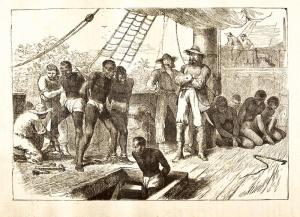
When it comes to historical sins of the Church for which no apology or reparations exist, the first things that come to many a mind are slavery and colonization. These concepts are different but related. One way to think about them is that slavery is colonization of the person and colonization is slavery of the people and the very land. Both are a crime and are rooted in a twisted idea of ownership that is not supported by a natural environment. Slavery and colonization happened in their own ways before Christianity. Slavery was a major component in building the very first ‘house of God’ in the bible (1 Kings 9:15-17). The way colonization and slavery happened and the people who did it in the Western hemisphere were specifically given moral cover by the Pope and material support in the name of the faithful. In America, this idea was taken by white Protestants and called the Doctrine of Discovery. While some have begun apologizing for the Doctrine of Discovery, the Roman Catholic Church has never retracted the papal bull that sanctioned the behavior. The Church gained unimaginable wealth and power through this process. While the Church is meant to be an expert in effective repentance, nearly nothing has been done to restore some of the stolen wealth.
The Church has also largely botched an institutional understanding of healthy human sexuality. Most often, the Church has repressed and oppressed healthy human sexuality while providing refuge to sexual predators. This is a problem that knows no denominational bounds and must be speaking to something deeper in Western culture. Predation aside, the Church’s persecution of the female body and of queer love, thereby also warping male sexuality and body image, is criminal. Again, while some liberal Protestant churches have begun changing their policy, the Church in nearly all her decision-making iterations remains a hetero-normative, gender-normative, institution rooted in patriarchy. Roman Catholic, Mainline, and Evangelical cultures all bear this weight.
This post could continue for ages talking about the Church’s support of capitalism, promotion of patriarchy, and destruction of the very creation that gave it life. Even now, I and all my mainline clergy colleagues have pensions based in the stock market. Our churches don’t effectively use their shareholder votes to try to influence company opinion. Instead, we ask retired folks for money and give a large portion, billions of dollars, to the stock market which help suppress wages and concentrate wealth.
These historic sins, for which little has been done to repair, are joined by the personal dangers involved in organized religion. Spirituality and religion speak to the vulnerable parts of a person. When the child living within each of us is connected to the parent living in each one of us healing happens and the kingdom of God comes into being. When this same vulnerable child is opened up to someone’s self-serving intent and harm is done the damage can be disastrous. Many people have experienced derelict pastoral care. Sometimes a pastor is sexually abusive. Sometimes she is a person who uses anger and manipulation to get their way. Sometimes he is a pastor with poor discretion. In some cases this person needs help and probably a break. Many times it is a pastor trying to keep their ill defined, always tenuous job who has developed bad habits in an environment of little direct, loving feedback. Every leader is a reflection of the community they lead. Every professional clergyperson is a human being. Still, just like the military is responsible for the health and behavior of its service folks, and every company is liable for the behavior of their employees while they are at work, the Church is responsible for the professional behavior of her presbyters. The number of people who have church-related trauma is a daunting implication for the organization and all who serve it. This cannot be ignored.
The Church has cancer. Mainline, Evangelical, Roman Catholic, or any other group. Cross culturally, the Church has exhibited these serious problems, and others. Of course, I am not describing all professional clergy. I am describing enough of the culture that it affects the entire organization. These problems are long standing. They are solvable.
We’ve seen the Good and the Bad. Next week, it’s the Ugly. Tune in to read how this crazy journey that started with a homeless, carpenter/rabbi from a small town turned into a globe shaping hegemony now entering its final stage of life.
***
What do you think? Have you ever been hurt by a church? Does this article have a glaring omission? Please like this post and leave a comment below! 🙂
I am an Episcopal priest. This makes me (if I so choose) a professionally religious, professionally Christian person. Like most people who get into something whimsical professionally, I probably did so because I was a decent amateur. I have had a life long experience in the Church through her many iterations. I have been active in Charismatic and Evangelical communities. I have worshipped and served Mainline Protestant congregations. I have spent received deep formation from monasteries and cathedrals. I have experienced healthy and dangerous versions of all these kinds of communities of earnest prayer and worship. Now raising a child of my own, I must reflect on the Church: the good, the bad, and the ugly. My child will do well to understand the path that leads to God, and the dangers of life-sucking abusive leaders and useless docility that lie on either side of this path.
Defining the Church is more an art than a science. The collected study and thoughts of crafting this definition is ecclesiology. This field is fascinating to explore, reading some great minds reflect upon, research, and postulate the best ways we gather together in a community of faithful people. For the purposes of this series of articles I will use Augustine of Hippo’s lens of the visible and invisible church. Responding to political disputes of his day this Church Doctor and bishop of the Egyptian city of Hippo explained that Christ’s community of faithful (the Church) existed both as an organization with resources, real estate, and disciplines (visible church). The Church is also a spiritual phenomena that transcends and material or temporal structures whose constituents are known only to God and exist in every culture and place (invisible). These two churches exist in a Venn state. When the visible church is healthy, that overlap is great. When unhealthy, maintained by the thinnest of margins. Let’s take a look at the times it has been healthy.
From the beginning, the followers of Christ made an auspicious name for themselves. For three centuries (longer than anyone has been ‘American’) Christians lived their faith in secret, surviving persecution, breaking the law to meet, giving stories to their children. These first Christians fed hungry widows, raised funds to free slaves, and tried to a violent contribute to society with integrity and peace.
As the Empire politically crumbled, the Church stepped into the vacuum all through Europe. Its monasteries were usually the only places of learning and preservation of important written works of antiquity. In the middle ages, monasteries were places where people could stay for free, have access to literacy instruction, and they often cared for orphans. These were places of learning, curiosity and discovery. Genetics was discovered in a monastery. Most of the West’s music theory and literature can be traced back to anonymous authors and scribes whose life’s work created the rich soil of our culture. Hospitals, schools, shelters and orphanages are all creations of members of the invisible church working within the structures of the visible church.
Even in this ‘unchurched’ city of Portland Oregon, most organized efforts to feed the hungry, shelter the unhoused, and protect the vulnerable have a faith community at their roots if not part of their current operation.
This post would be remiss to omit a personal testimony for the Church. More than once in my life, when I have been broken and lacking direction, I have found refuge in a faith community where I have been shown kindness and directed toward life-giving activities such as making music, prayer, and study. I have benefitted from this contact in some key broken moments.
As a church professional, I have also experienced people who find that same refuge in a church. Many who are involved in a faith community experiences themselves as broken or in need in some way. I have seen widows and orphans receive help they desperately need, lonely people find friends, and people of all stages of life be grounded for the natural hardships that life can bring. Sometimes this personal work happens through a visible church program. Most often, it is through invisible, informal acts of care and kindness: a smile and greeting given, phoning friends to rally support, or an invitation to be with a new friend.
The early followers of Christ came into a difficult and cruel world built on coercion and extraction. Somehow, through life’s trials and the Empires’ persecution they persevered and helped create a world where literacy, emergency health care, full bellies, and child care are more available and valued greater than when they began. I can personally attest to how the Church has broadly helped me by providing a consistent refuge of kindness and growth whenever I have needed it. Many others have experienced the joy of helping and being helped, learning, and praying together, all because the Church exists, both in spiritual and material form.
I wish this was the end of the reflection; we have a problem on our hands. The Church also has some flaws and issues that are comparable in impact to her many blessings and benefits. Seeker beware. With good information and clear reflection one can find that straight and narrow path where on the left is the chasm of cultish abuse and on the right a pit of hopeless inaction. Together we will examine the good, the bad, and the ugly about the Church and be her adult children and friends who can love her to the next stage.
***
What resonates or works for you in this article? How could it be better? Leave a comment to help me know what is interesting to read and where you’d do it different!
Who the heck is Melchizedek? Or is it Malki Tzedek? Who is to say. Many people know the leading cast of the Bible: Adam, Eve, Abraham, Sarah, Moses, Ruth, David, Jesus, etc. In that mix we have this figure, Melchizedek, the Canaanite priest-king of the ancient city Salem. The earliest Christians associated him with the divinity of Jesus Christ. His identity, role, and mythological function can be instructive for people of faith today.
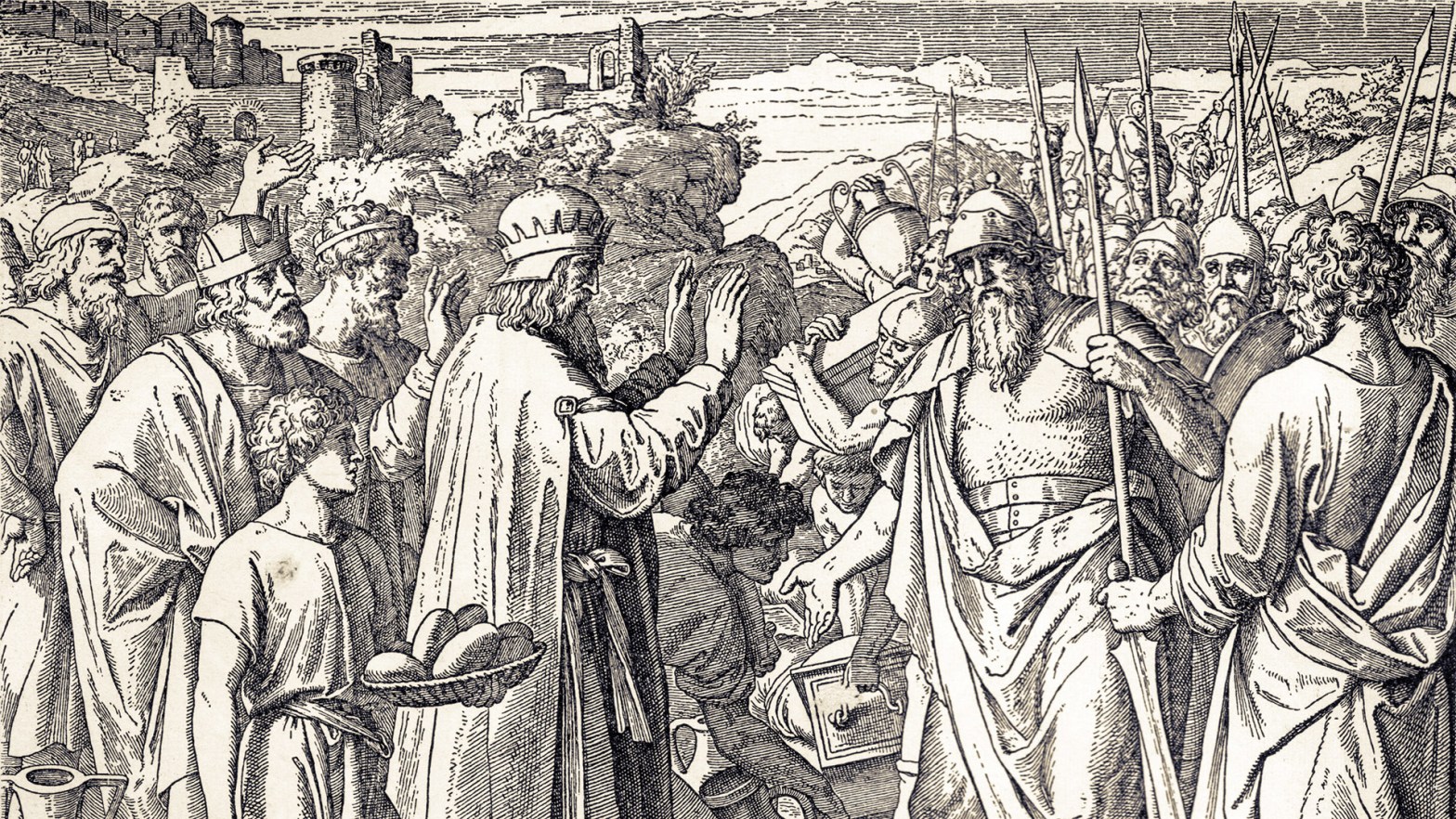
Melchizedek is mentioned three times in the Bible: Genesis (14:17-24), Psalms (110:4), and the letter to the Hebrews (7:1-11). His name can be roughly translated to mean “king of justice” or “king of righteousness”. Additionally, he is the king of Salem, the king of ‘peace’. This is the Cannanite city that is eventually conquered by David and renamed Jerusalem (2 Sam. 5, 1 Chron. 11). Early Christian writer, Chrysostom hypothesized his priesthood is self-appointed or conferred by his peers, the rulers of other nearby cities (Sheridan, 2002). Abram and the author of Genesis recognizes him as a holy person who serves as intermediary between the divine and natural. He is also a political and military leader. His signature act in the drama is to offer bread and wine to the returning victors of a rescue mission.
It is no accident that a defining sacrament of Jesus Christ is to emulate Melchizedek by also offering bread and wine. The unknown author of the letter to the Hebrews recounts this Genesis story and fills out a few details, noting that Melchizedek had no know genealogy yet receives Abraham’s tithe and offers a blessing.
Many early Christian writers from Augustine to Severian of Gabala (Heen and Krey, 2002) point to a priesthood, a ‘pastor-hood’ if you will, that is naturally occurring. It is not bestowed, rather it is assumed. The priesthood of Melchizedek can represent a threat to an institutional line of authority, referred to as the priesthood of Levi or Aaron. One can understand why the bastard son of the carpenter’s wife, Jesus, would be attracted to the story of Melchizedek. Why the followers of Jesus, a ragtag crew of slaves, laborers, prostitutes, and tax collectors would also appreciate a story of a priestly line to which they are entitled, that is not controlled by a bureaucrat, but by Nature Herself.
Many have probably experienced this priesthood of Melchizedek. One opens their heart when others are vulnerable and in pain, responding with love healing occurs. It is the meeting place of compassion and wisdom, Where the moment expands to its true divine purpose. When we show up for each other, as individuals and institutionally, we have acted as a priest in that moment, bridging our ordinary experience with something that has deeper, more profound meaning. You have facilitated catharsis.
The priesthood of Melchizedek is free but it’s not cheap. This priesthood is a leap of faith, falling through the image of worldly success to become a magical healing agent. One never knows where that might lead, who it may inspire. If Melchizedek was ever a real person, he never could have imagined so many would invoke his name, that he would have inspired so much culture, or forge a container for a sacred experience for billions of people.
You are ordained into an order or priests. It is the priesthood of Melchizedek. How does that priesthood express itself in your life? Leave a comment below, and Happy Epiphany!
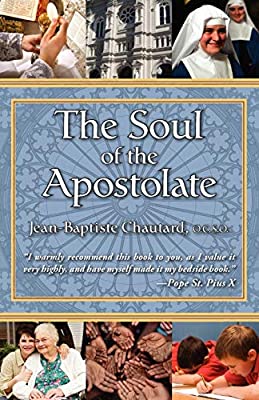
We all know that the road to hell is paved with good intentions. What they rarely tell us is that the road to heaven is also paved with good intentions. The operative difference in all the roads our soul could travel, according to Dom Jean-Baptiste Chautard (O.C.S.O.), is where it is going and how deeply it is set. In his 1946 classic on the interior life, Chautard lays out a long and strong case that the appropriate root for all action is that it comes from the reflection of the soul, the interior life. This interior life is where action begins, and that action begun apart from the interior life is only feeding the ego and sure to harm someone.
A few words of introduction may be in order, especially for my non-Catholic readers. OCSO is an order of Christian monks of which our author is a part. In fact, when he wrote this book, he was the head monk in the entire OCSO. You can find out more specifics about what OCSO means here. Shorthand, they are one of the more austere, gritty Christian orders known for long periods of deep silence, hard manual labor, and lives of scrubbed simplicity. An apostolate is what someone has after they have studied with Jesus and accepted a mission from Christ. In technical Church terms it means a professional religious person. Any work that one wishes to be rooted in Christ (family, professional, community, etc.) can and should be rooted.
This book is famous in Roman Catholic clergy circles. Many cardinals, bishops, and even a few Popes have referenced this book as instrumental in their personal and vocational journey. The active life is the life that others can see. It is composed of that which we do. The interior life is that which only we and God can see. It is composed of what we think and feel, where our hearts lead us, and what our Creator is saying to us.
Consider the character and core values of the God of the bible. This personality described in the bible favors zealous, fervent action over accidental, flaccid acts (Rev. 3:16). The immediacy of the gospels, the Acts of the apostles, and the saints of the Hebrew scripture show that God’s people are people of action. That action flows from the spirit or force many call Christ. Christ is discovered, understood, and obeyed through nurturing the interior life.
Chautard lays out 11 ‘truths’ of the interior life he says “everyone is obliged to accept… as absolutely certain, and base [their] inner life upon them. These rules details stoking desire, watching for and repairing character flaws, and understanding that “If God calls me to apply my activity not only to my own sanctification, but also to good works, I must establish this firm conviction before everything else, in my mind.” (pg. 20) In other words, the contemplative actor places the Christ at the source of conviction and energy for the work they are to do. Like fire under the pot of boiling water, the interior life has its place at the foundation of the human experience to power a kind of action that is life-giving.
A long and strong tradition in the Church states that the interior life is superior to the active one. The story of Mary and Martha is often used to illustrate this point (Luke 10). Little is written to point our that a life of contemplation is a luxury that takes some creativity for a person with children, or caring for the elderly, or making one’s way in the economy. Chautard is clear to explain that the interior and active lives are interdependent. One without the other is either short-lived or absurd. The promise of the union of these two modes of life, however, is of ‘a powerful union, and a fruitful one. What miracles of conversion it can work!” (pg. 67)
What happens to the active worker in Christ with little or ‘no’ interior life? Harm can happen. The fervor that once inspired good works can wane when removed from the fire of the heart. The interior life, however, restores the soul, energizes the work, protects the heart from breaking, and keeps one’s confidence high. Without the interior life, the active life is full of danger. With the interior life comes a source of clarity and motivation.
Effective action in Christ is about more than cold efficiency. When it comes to effecting healing and spreading happiness, one’s character plays a big role in how that all happens. The interior life helps the active person grow in humility with success and be grounded in themselves to offer a gentle, firm affect. Many people grow up never knowing about the interior life, possibly stumbling upon it later in life. The inner life is hard, subversive work. Chautard suggests that even children can be raised aware of the interdependent nature of their inner and active life. Understanding this relationship ourselves and passing that information on to future generations is one of the faithful seeds of hope for humanity’s collective salvation.
Many deeper and more technical descriptions fill this book such as structuring the prayer life with both silent prayer in solitude and liturgical (or organized) prayer with a community. In fact, this life of prayer leading to action often flowers best in the context of a loving, safe, and focused community of practice and support.
As a Protestant, reading a pre-Vatican II book on spirituality by a Roman Catholic can be a challenging exercise is code-switching. Chautard writes from the perspective of someone who has found the ‘true faith’. His writing is male-centered and clergy-centered. While some of his writing is definitely outmoded, I find other parts of refreshing. This book takes sin seriously and gives some ways to examine one’s self to be at one’s best. There is also a certain order laid out that, while not definitive, gives a possible path to the person looking to improve their soul (and thereby their actions) through prayer. If you are healing from religious trauma or are triggered by old religious men, stay away from this book. If you can take the journey into Dom Chautard’s mind and avoid what is no longer useful, some gems and truths of the Christian monastic tradition await.
What do you think? Have you seen how the interior life feeds the active? Do you think sitting around ‘listening to God’ is a waste of time? Put your comments below about how your inner and active life relate to each other.
Below is an example of a public narrative given as an example to the Multnomah County cohort of the Land and Housing Coalition. A public narrative is a focused exercise designed to connect the story of self to the story of community in a way that results in a clear, concrete action. This specific style of story telling has been researched and formulated by Marshall Ganz, a well known organizer that worked with Ceasar Chavez in helping organize the California farm workers in the 20th century.
***
Hello. My name is Joshua Kingsley. I am a priest on special assignment in the Episcopal diocese of Oregon. I live in a community in the Montavilla neighborhood. I am a bicycle commuter.
My neighborhood has seen an explosion of houseless people living in tents. We have also seen an increase in violent crime. The vulnerable attract predators. It is difficult for homeless people, housed neighbors, and business owners to all communicate together. This has contributed to parts of my neighborhood falling into disrepair, with burned out cars on the streets and human waste in the lawns and bushes. Communities of people have arisen on the bike path, choking the egress. Many, many people I know worry about their housing. It feels unstable, and not just because of COVID. Work is inconsistent, even unemployment has stopped for many. People I know (single women in their early 60s, a warehouse worker struggling with addiction, a dedicated child care worker), people who have college degrees and significant work experience are living days or weeks at a time in their current housing, understanding that those tent cities are their next stop.
I am an unlikely witness to you all. I was born when my mother was only herself a child. My education in housing insecurity began on day 4 when my mother was discharged from the hospital. Even after remarrying (supposed to be a statistical bump for the cause of housing) my family continued to struggle to stay housed. I’ve lived in large section 8 developments, single wide trailers, campers, and RVs as one of six in my family. I can speak first hand of the humor found in precarity, and the clever ways we came up with to try and live our lives. I know the difficulty of a student who is trying hard in school, but moving every 9 months. I have seen the stress placed on adults as they try desperately to navigate a game of ‘musical chairs’ in their housing situation while also raising four children.
I managed to make it out. I’m a (somewhat) respectable homeowner in a respectable neighborhood. I’ve been lucky a number of times. Many in my family haven’t been as much so. Housing pressures are some of the most primal pressures one can feel.
We are people of faith. We are each here because we are leaders in our communities. We are champions of love, reason, and solidarity. We care for the stranger and downtrodden. Many, many of us have been the downtrodden at some point in life.
This is the time to claim our agency and use the gems of our faith that enable us to work together for miracles. That’s what we’re proposing. Affordable housing is literally a miracle, just as real as healing a limb or raising the dead. Now is the time because our neighborhoods are in trouble. Now is the time because people that we love are directly touched by housing insecurity today. Now is the time to begin because the
I ask you to be in touch with how your personal housing story is connected to the pressures exerted by our system. I implore you to gather with your friends of good faith and share housing stories. Allow yourself to be emotionally and spiritually moved. Please, get involved with your friends to make a difference and extend a helping hand to those who need it. You could help someone like me. I am witness that the effort is not in vain.
***
Each person has a public narrative. In that narrative we experience gain and loss, we begin to see the role we each play in the systems that govern our life. Understanding our story is the first step toward justice.
I invite you to set aside an hour and practice writing your story. It can be around housing or any other topic about which you care. You can keep it to yourself or share it. You can find more information about public narratives here.
God is working within you to bring about the world to come. Your personal/public story contains some of the wisdom and clarity we need. Practice it, use it, and share it when you’re able.
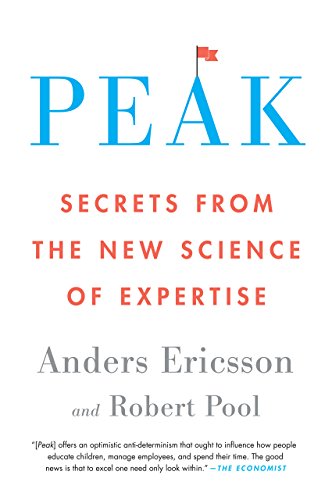
On the other side of the deep pool of spirit inside each person is the outlet, the acting out, their performance. Each person is malleable and adaptable according to their desire and will power. One’s actions and impact are the only worthwhile fruit of any inner work (James 2:14-26). Acting with intention in a way that clearly communicates a purpose is performance. Performance can be studied, honed, and expanded. It is the study of performance Anders Ericsson considers in Peak: Secrets from the new science of expertise.
Using case studies of people memorizing random strings of numbers, Ericsson begins to describe how highly concrete, long studied fields with a high degree of consensus of accurate performance (music performance, chess, sports, etc.) hold some clues regarding how people intentionally improve a skill. These clues include…..
Power in Practice
Practicing something is essential to maintaining a skill let alone improving it. Not just any kind of practice will do, however. There is a certain kind, a very mindful, deliberate practice that is slow and has an intention in mind. Only this kind of practice will help a person get to their destination. This purposeful practice requires getting feedback and moving out of one’s comfort zone.
Keeping our Potential Alive
The human brain is a fascinating organism in its ability to adapt, imagine, and imitate. Like many physical aspects to the human experience, without continued learning and development, the brain begins to fall apart and wear down. That said, so much human potential exists that a person could be always learning, always growing. Harnessing one’s adaptability feels good and fulfilling,
Developing the Mind
Mental representations play a key role in an individual developing a skill. These representations are large collections of information (groupsets) analogized or made into a story for easier handling and storage in long term memory. These mental representations make possible “memory, pattern recognition, problem solving, and other advanced abilities needed to excel” (pg. 63). The better in quality and more in quantity of these representations, the more one can excel in a skill.
Deliberate Practice
In the end, we much each approach our craft alone. This is certainly true of the kind of practice that helps people excel to the top of a given skill. All the evidence points to solitary, personal practice being the key differentiator between the good and the great. That’s not all. This practice must be deliberate. Deliberate practice is purposeful practice (feedback and discomfort) is purposeful practice, with a conscious and continually refined set of mental representations, that has a clear and concrete goal. This kind of practice focuses on skill rather than understanding or knowledge.
Applied
Deliberate practice can be applied in the public and private sphere. To do this, one needs to both continually update their skills through a reflective, challenging practicing community. Additionally, one needs to be always improving their mental representations, keeping the robust and multi-facited.
Finding a good teacher helps. Very few, if any, people improve significantly in isolation. With a plan, firm engagement, and a community of support, consciously developing and refining one’s skills is one of the most powerful ways to improve the effectiveness of one’s practice.
What Now?
Ericsson is clear that anyone, regardless of age, has the capacity to grow and change. He says, “While the adult brain may not be as adaptable in certain ways as the brain of the child or adolescent, it is still more than capable of learning and changing”. Regardless of any natural-born abilities, the ability to engage in deliberate practice, tolerate a certain level of discomfort, and be involved in a practicing community give anyone a good shot at being great (or a great shot at being good) at almost anything.
What happens when this understanding is applied to the spiritual life? Can a spiritual practice also have elements of deliberate practice? A deliberate, spiritual practice?
I have written about the importance of one’s spirit, and spoken of how people living intentionally out of their spirit is a documented global phenomena. That is to say, it is a naturally occurring phenomena. Spiritual practice requires some outlet of action effected through the changing of our hearts. Each spiritual practice is beautiful; it deserves an excellent, well practiced set of skills through which to come express itself. Deliberate practice is a deeply loving gift to compliment our inner practice.
How do you practice? What do you practice? Please comment about how your spiritual life comes out through action.
The following was delivered as a sermon at Lynchwood Christian Church in Portland, Oregon on November 8th as part of their series on ‘Brave Questions’. The readings for this are Genesis 1:1-3, 28-30 and Revelation 21:1-8
***
Addressing ‘Brave Questions’ is essential to the process of growth, learning, and conversion. When considering the broad sweep of action in our universe, the question of why does not seem to have a natural or readily apparent answer. Children and good people suffer at the hands of the cruel and irresponsible, who themselves are often suffering their own deep pain or disconnection. If people don’t cause someone suffering, nature herself has plenty of ways to uncaringly conspire against our comfort and rest. This year, two children who are neighbors and friends of our family were swept to sea and drown. Entire galaxies come into being and blink out of existence on a regular basis.
Through this sea of chaos we have arrived. These little members of the Great Ape family, human beings, with our rare if not singular gift of awareness combined with the happy accident of having some collective time on our hands with which to ponder. Gifts and time can be dangerous and exciting in the hands of the clever. We live in the most recent act of the Holocene era, a period of the planet Earth’s development shaped predominantly by human activity. For not the first time, human beings have organized themselves, planned and divided our labor, and harnessed the forces of nature and given ourselves power. Almost literally, we each have the power of the gods.
And yet, the question which Nature through creation and evolution has given is the nagging ‘why’. Why are we here individually and collectively?
This question betrays part of it’s cause: humanity and a whole (and each of us as individuals) has somehow gotten off track. One can observe the hummingbird and the ant who never struggle with unemployment of a lack of motivation. Their purpose of setting the world at order seems apparent to an observer. In short, it seems clear why they are here.
I propose we investigate a small portion of the Hebrew and Christian scriptures to hear the wisdom of our ancestors as they grapple with these same questions. To do so, with the time we have, I suggest the creation and apocalypse as two instructive texts to probe why we are here. One tells us how we got here, the other where we are going. I pray that understanding the purpose we may chart our course in good faith.
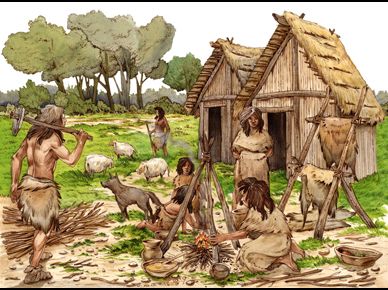
Imagine humanity on the cusp of the agricultural revolution. For the first time people were beginning to convert from being hunter-gatherers living in familial tribes to being farmers and laborers living in cities with governments. What would it be like to be a first generation farmer or city dweller. One would have traded the precarity of nature for the stability of science, relationship with the other for police protection, a world of spirits for a world of gods, and ultimate purpose for the promise of ultimate power.
In so many ways, our creation story is formally similar to most of the creation stories of the world. These stories, our creation story, is the voice of our pre-agricultural ancestors calling out that before us people made extraction and security our primary vocations, this place was ‘good’. Sure, tragedy and human frailty still played a role in the lived experience, say these ancestors, but life was full and lived out by and large on each individual’s terms. Our creation story tells us that people were free of shame and expectation. Their progeny (us) a people who struggle with depression, addiction, mental and physical health who struggle to marshal the collective will power to ensure land, labor, and lodging for everyone even though it seems that we could.
Our ancestors must have known something about being creative. They had conquered many challenges to survive. It is telling that the first thing the God we worship does is create. God is a creator. That creation takes shape when God approaches something without form and shape and begins drawing out contrast and particularity.
By the time we faithful get to the end of the story, things are different. The Bible’s narrative is clear that we people can never again enter the innocence and precarious survival of the Garden of Eden. Instead, after the defeat of the great dragon of principalities, powers, rulers of darkness, and wickedness in high places, humanity is graced with a new heaven and new earth. People live in a new city that is distinguished not by the contrast between its inhabitance but by the unity. God no longer needs a temple (or rather, people no longer need a temple) but God lives freely in the hearts of each person. In other words, the planet itself becomes the temple and people themselves have become the bible.
John’s Revelation captures the end of the creative cycle of humanity. In the beginning people had exited the garden and busied themselves with ‘creating’ order through contrast and differentiation. By the end, these very systems had taken on a life of their own having been driven by human greed and ambition. By the time these systems topple (or are defeated) people are ready for something new. No longer to people need to be defined, quantified, governed, paid, and compelled in this new city. Instead, it seems, the natural order has been restored.
So, I can understand the question of why are we here and why are we here? To start with the latter first, it seems that we are here due to a chain of human decisions and exercises of power. People made trade offs when an old way of life seemed less sustainable.
Why are we here? Humanity has a role to play in this creation the same as the rest of the animals. Humanity is an expression of creation. We are the conscious expression that is able to ask questions. It has been said that humanity is the universe’s expression of consciousness. We are they part of this planet that asks questions like ‘why’. Much of the business of our existence happens outside of our awareness. It could very well be that consciousness plays a larger role in keeping our cosmos together.
There is one more application of our case questions. Why are you here? What is the role you currently play in this drama of life? Our society would tell us that only people with the right age, skin color, gender, or education have a meaningful, valuable, role to play. I say that each one of us has God’s business set before us. Each of us has a task appropriate to our stage of and position in life. Are you young, learn and dream! Are you old, share wisdom! Are you rich, give it away! Are you poor, share your presence and teach us of Christ!
One thing is for certain, reason and purpose for your existence lie at your fingertips. With the help of friends and sojourners you can find this purpose in spirit.
As for each of us, our purpose is within us and our world is not waiting. Let’s jump into God’s story and discover our eternal life.
I have experienced many times in my life as a priest that talking to people of good faith about power can be uncomfortable. We have heard many times that power corrupts. Many people involved in organized religion have been hurt by institutional betrayal at the hands of powerful people. Some describe this phenomena as power over. Power over is a tricky thing. It can come out anywhere. When subjected to power over for too long, some (including myself) begin to practice power over. It can take a lifetime to break an addiction to power over.
Many have been taught to be humble, meek, poor, and maybe even docile in response to this power over. Some people say we must leave the arena of power to the violent since they so often have control there. It is a nasty business, not fit for people of Good Faith. Meanwhile, the faithful are thrown to the proverbial lions of corporate greed and manufactured scarcity.
There is, however, another side to the experience of faith. The prophet Mohommad (PBUH) is held to be a miracle performing person of power. Guatama Buddha found power in clarity, focus, and love that was used to heal and teach others. Taoist master, Lao Tzu teaches that, “Understanding others is strength. Understanding ourselves is power”. Jesus Christ tells his followers that “power and the Holy Spirit” will come upon them, and Paul prays that the early faithful are strengthened with power and Spirit (Eph. 3).
Power is something each of us has. It is one of the qualities of our species.
This power can take many shapes, and has many expressions. One of these is the capacity for love and friendship, courage, trust, hope, and sustenance. These are considered attributes of spiritual power. This is sometimes called power within. Many of us have spiritual practices that reinforce this power and build our capacity.
Sometimes one can be moved by the power of the other. Sometimes others are moved by our power. Many have experienced this at a concert, or a sporting event, or a religious service. Sometimes I experience this moving power when I hear someone’s story with empathy. This kind of power is sometimes called power among or Relational Power. Relational power is an outlet of our inner, spiritual power. It is relational power that moves the levers of bureaucracy and system.
Power is something each of us has. It is one of the qualities of our species. Most often, when someone is not using their power with agency, someone else is using that power toward their own goals. Recently, people of Good Faith have begun uniting around affordable housing in Portland. Trusting in ancient spiritual practices and using latest models and best practices, the Leaven Land & Housing Coalition has become an exciting and groundbreaking demonstration of translating power within into power among. A work whose seeds were planted generations ago has blossomed into an interfaith and ecumenical coalition that has a strategy and stands a serious chance at healing broken parts of our housing system. They stand on the precipice of translating the power within and power among into the powerto. Among this Coalition’s leaders are Melissa Reed and Julia Nielsen. Along with all involved in this specific coalition, they are demonstrating power to affect the change for which their spirits’ yearn!
The inner spiritual work must flow out or it becomes stagnant. The home and family is one natural place for that to happen. Another is our work. When together with others in a supportive practice environment it can become the world, and one becomes liberated in eternal time.
Everyone has a spiritual practice. Each practice has an outlet. What are the outlets for your spiritual practice? In what stage is your journey? With whom are you sharing it? Help and support are there for those who seek.


















 Joshua David Kingsley