Who the heck is Melchizedek? Or is it Malki Tzedek? Who is to say. Many people know the leading cast of the Bible: Adam, Eve, Abraham, Sarah, Moses, Ruth, David, Jesus, etc. In that mix we have this figure, Melchizedek, the Canaanite priest-king of the ancient city Salem. The earliest Christians associated him with the divinity of Jesus Christ. His identity, role, and mythological function can be instructive for people of faith today.
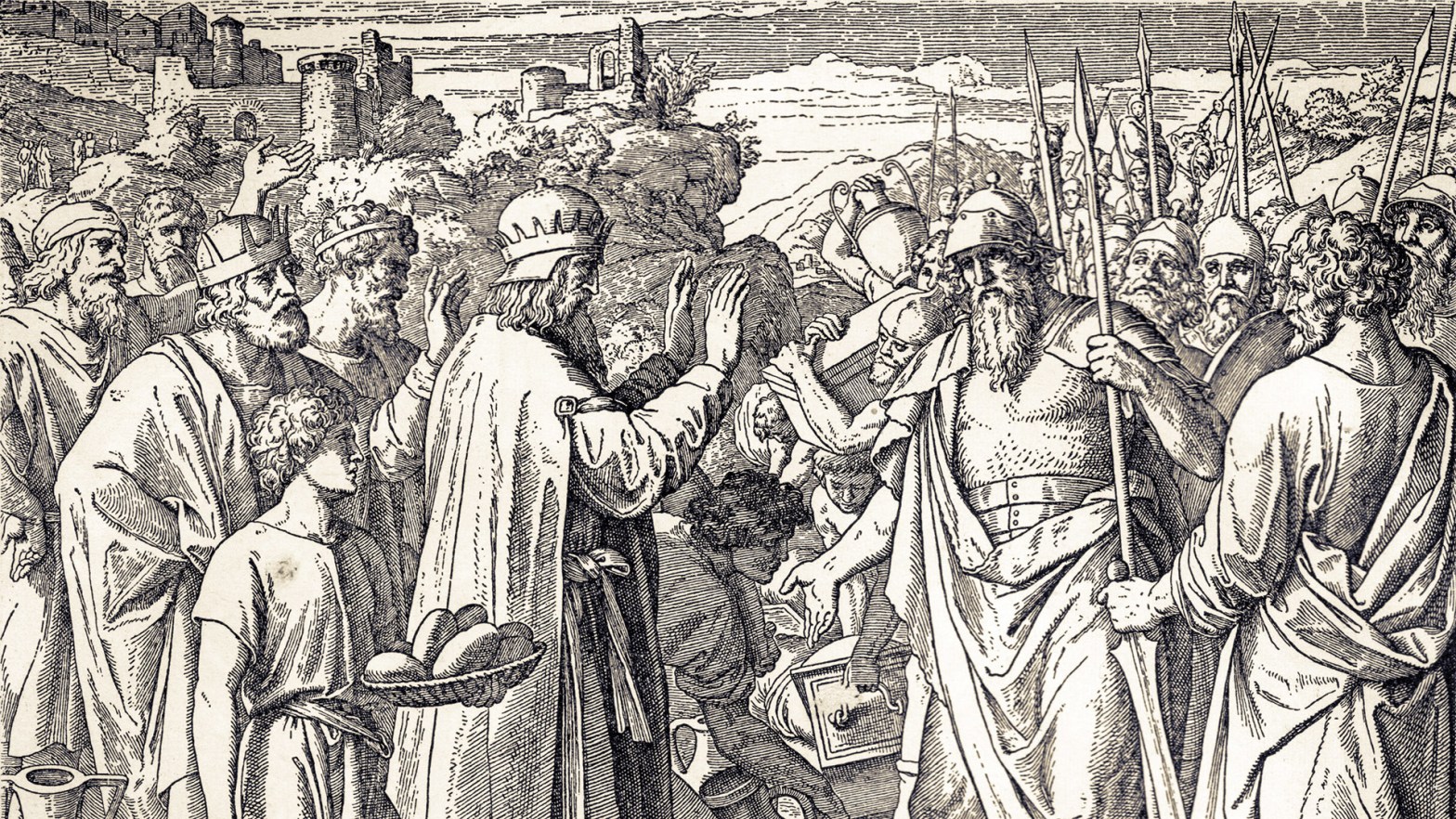
Melchizedek is mentioned three times in the Bible: Genesis (14:17-24), Psalms (110:4), and the letter to the Hebrews (7:1-11). His name can be roughly translated to mean “king of justice” or “king of righteousness”. Additionally, he is the king of Salem, the king of ‘peace’. This is the Cannanite city that is eventually conquered by David and renamed Jerusalem (2 Sam. 5, 1 Chron. 11). Early Christian writer, Chrysostom hypothesized his priesthood is self-appointed or conferred by his peers, the rulers of other nearby cities (Sheridan, 2002). Abram and the author of Genesis recognizes him as a holy person who serves as intermediary between the divine and natural. He is also a political and military leader. His signature act in the drama is to offer bread and wine to the returning victors of a rescue mission.
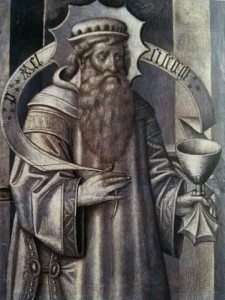
It is no accident that a defining sacrament of Jesus Christ is to emulate Melchizedek by also offering bread and wine. The unknown author of the letter to the Hebrews recounts this Genesis story and fills out a few details, noting that Melchizedek had no know genealogy yet receives Abraham’s tithe and offers a blessing.
Many early Christian writers from Augustine to Severian of Gabala (Heen and Krey, 2002) point to a priesthood, a ‘pastor-hood’ if you will, that is naturally occurring. It is not bestowed, rather it is assumed. The priesthood of Melchizedek can represent a threat to an institutional line of authority, referred to as the priesthood of Levi or Aaron. One can understand why the bastard son of the carpenter’s wife, Jesus, would be attracted to the story of Melchizedek. Why the followers of Jesus, a ragtag crew of slaves, laborers, prostitutes, and tax collectors would also appreciate a story of a priestly line to which they are entitled, that is not controlled by a bureaucrat, but by Nature Herself.
Many have probably experienced this priesthood of Melchizedek. One opens their heart when others are vulnerable and in pain, responding with love healing occurs. It is the meeting place of compassion and wisdom, Where the moment expands to its true divine purpose. When we show up for each other, as individuals and institutionally, we have acted as a priest in that moment, bridging our ordinary experience with something that has deeper, more profound meaning. You have facilitated catharsis.
The priesthood of Melchizedek is free but it’s not cheap. This priesthood is a leap of faith, falling through the image of worldly success to become a magical healing agent. One never knows where that might lead, who it may inspire. If Melchizedek was ever a real person, he never could have imagined so many would invoke his name, that he would have inspired so much culture, or forge a container for a sacred experience for billions of people.
You are ordained into an order or priests. It is the priesthood of Melchizedek. How does that priesthood express itself in your life? Leave a comment below, and Happy Epiphany!

