I am an Episcopal priest. This makes me (if I so choose) a professionally religious, professionally Christian person. Like most people who get into something whimsical professionally, I probably did so because I was a decent amateur. I have had a life long experience in the Church through her many iterations. I have been active in Charismatic and Evangelical communities. I have worshipped and served Mainline Protestant congregations. I have spent received deep formation from monasteries and cathedrals. I have experienced healthy and dangerous versions of all these kinds of communities of earnest prayer and worship. Now raising a child of my own, I must reflect on the Church: the good, the bad, and the ugly. My child will do well to understand the path that leads to God, and the dangers of life-sucking abusive leaders and useless docility that lie on either side of this path.
Defining the Church is more an art than a science. The collected study and thoughts of crafting this definition is ecclesiology. This field is fascinating to explore, reading some great minds reflect upon, research, and postulate the best ways we gather together in a community of faithful people. For the purposes of this series of articles I will use Augustine of Hippo’s lens of the visible and invisible church. Responding to political disputes of his day this Church Doctor and bishop of the Egyptian city of Hippo explained that Christ’s community of faithful (the Church) existed both as an organization with resources, real estate, and disciplines (visible church). The Church is also a spiritual phenomena that transcends and material or temporal structures whose constituents are known only to God and exist in every culture and place (invisible). These two churches exist in a Venn state. When the visible church is healthy, that overlap is great. When unhealthy, maintained by the thinnest of margins. Let’s take a look at the times it has been healthy.
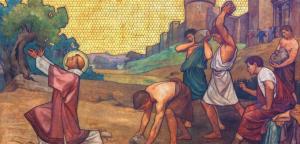
From the beginning, the followers of Christ made an auspicious name for themselves. For three centuries (longer than anyone has been ‘American’) Christians lived their faith in secret, surviving persecution, breaking the law to meet, giving stories to their children. These first Christians fed hungry widows, raised funds to free slaves, and tried to a violent contribute to society with integrity and peace.
As the Empire politically crumbled, the Church stepped into the vacuum all through Europe. Its monasteries were usually the only places of learning and preservation of important written works of antiquity. In the middle ages, monasteries were places where people could stay for free, have access to literacy instruction, and they often cared for orphans. These were places of learning, curiosity and discovery. Genetics was discovered in a monastery. Most of the West’s music theory and literature can be traced back to anonymous authors and scribes whose life’s work created the rich soil of our culture. Hospitals, schools, shelters and orphanages are all creations of members of the invisible church working within the structures of the visible church.
Even in this ‘unchurched’ city of Portland Oregon, most organized efforts to feed the hungry, shelter the unhoused, and protect the vulnerable have a faith community at their roots if not part of their current operation.
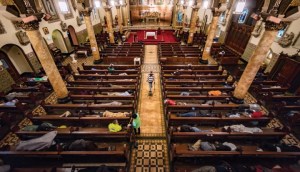
This post would be remiss to omit a personal testimony for the Church. More than once in my life, when I have been broken and lacking direction, I have found refuge in a faith community where I have been shown kindness and directed toward life-giving activities such as making music, prayer, and study. I have benefitted from this contact in some key broken moments.
As a church professional, I have also experienced people who find that same refuge in a church. Many who are involved in a faith community experiences themselves as broken or in need in some way. I have seen widows and orphans receive help they desperately need, lonely people find friends, and people of all stages of life be grounded for the natural hardships that life can bring. Sometimes this personal work happens through a visible church program. Most often, it is through invisible, informal acts of care and kindness: a smile and greeting given, phoning friends to rally support, or an invitation to be with a new friend.
The early followers of Christ came into a difficult and cruel world built on coercion and extraction. Somehow, through life’s trials and the Empires’ persecution they persevered and helped create a world where literacy, emergency health care, full bellies, and child care are more available and valued greater than when they began. I can personally attest to how the Church has broadly helped me by providing a consistent refuge of kindness and growth whenever I have needed it. Many others have experienced the joy of helping and being helped, learning, and praying together, all because the Church exists, both in spiritual and material form.

I wish this was the end of the reflection; we have a problem on our hands. The Church also has some flaws and issues that are comparable in impact to her many blessings and benefits. Seeker beware. With good information and clear reflection one can find that straight and narrow path where on the left is the chasm of cultish abuse and on the right a pit of hopeless inaction. Together we will examine the good, the bad, and the ugly about the Church and be her adult children and friends who can love her to the next stage.
***
What resonates or works for you in this article? How could it be better? Leave a comment to help me know what is interesting to read and where you’d do it different!
 Joshua David Kingsley
One thought on “Church: The Good”