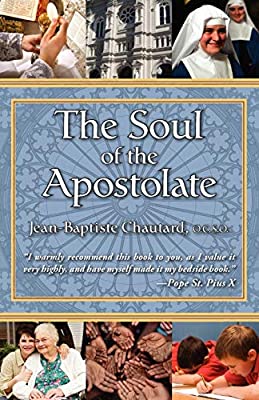
We all know that the road to hell is paved with good intentions. What they rarely tell us is that the road to heaven is also paved with good intentions. The operative difference in all the roads our soul could travel, according to Dom Jean-Baptiste Chautard (O.C.S.O.), is where it is going and how deeply it is set. In his 1946 classic on the interior life, Chautard lays out a long and strong case that the appropriate root for all action is that it comes from the reflection of the soul, the interior life. This interior life is where action begins, and that action begun apart from the interior life is only feeding the ego and sure to harm someone.
A few words of introduction may be in order, especially for my non-Catholic readers. OCSO is an order of Christian monks of which our author is a part. In fact, when he wrote this book, he was the head monk in the entire OCSO. You can find out more specifics about what OCSO means here. Shorthand, they are one of the more austere, gritty Christian orders known for long periods of deep silence, hard manual labor, and lives of scrubbed simplicity. An apostolate is what someone has after they have studied with Jesus and accepted a mission from Christ. In technical Church terms it means a professional religious person. Any work that one wishes to be rooted in Christ (family, professional, community, etc.) can and should be rooted.
This book is famous in Roman Catholic clergy circles. Many cardinals, bishops, and even a few Popes have referenced this book as instrumental in their personal and vocational journey. The active life is the life that others can see. It is composed of that which we do. The interior life is that which only we and God can see. It is composed of what we think and feel, where our hearts lead us, and what our Creator is saying to us.
Consider the character and core values of the God of the bible. This personality described in the bible favors zealous, fervent action over accidental, flaccid acts (Rev. 3:16). The immediacy of the gospels, the Acts of the apostles, and the saints of the Hebrew scripture show that God’s people are people of action. That action flows from the spirit or force many call Christ. Christ is discovered, understood, and obeyed through nurturing the interior life.
Chautard lays out 11 ‘truths’ of the interior life he says “everyone is obliged to accept… as absolutely certain, and base [their] inner life upon them. These rules details stoking desire, watching for and repairing character flaws, and understanding that “If God calls me to apply my activity not only to my own sanctification, but also to good works, I must establish this firm conviction before everything else, in my mind.” (pg. 20) In other words, the contemplative actor places the Christ at the source of conviction and energy for the work they are to do. Like fire under the pot of boiling water, the interior life has its place at the foundation of the human experience to power a kind of action that is life-giving.
A long and strong tradition in the Church states that the interior life is superior to the active one. The story of Mary and Martha is often used to illustrate this point (Luke 10). Little is written to point our that a life of contemplation is a luxury that takes some creativity for a person with children, or caring for the elderly, or making one’s way in the economy. Chautard is clear to explain that the interior and active lives are interdependent. One without the other is either short-lived or absurd. The promise of the union of these two modes of life, however, is of ‘a powerful union, and a fruitful one. What miracles of conversion it can work!” (pg. 67)
What happens to the active worker in Christ with little or ‘no’ interior life? Harm can happen. The fervor that once inspired good works can wane when removed from the fire of the heart. The interior life, however, restores the soul, energizes the work, protects the heart from breaking, and keeps one’s confidence high. Without the interior life, the active life is full of danger. With the interior life comes a source of clarity and motivation.
Effective action in Christ is about more than cold efficiency. When it comes to effecting healing and spreading happiness, one’s character plays a big role in how that all happens. The interior life helps the active person grow in humility with success and be grounded in themselves to offer a gentle, firm affect. Many people grow up never knowing about the interior life, possibly stumbling upon it later in life. The inner life is hard, subversive work. Chautard suggests that even children can be raised aware of the interdependent nature of their inner and active life. Understanding this relationship ourselves and passing that information on to future generations is one of the faithful seeds of hope for humanity’s collective salvation.
Many deeper and more technical descriptions fill this book such as structuring the prayer life with both silent prayer in solitude and liturgical (or organized) prayer with a community. In fact, this life of prayer leading to action often flowers best in the context of a loving, safe, and focused community of practice and support.
As a Protestant, reading a pre-Vatican II book on spirituality by a Roman Catholic can be a challenging exercise is code-switching. Chautard writes from the perspective of someone who has found the ‘true faith’. His writing is male-centered and clergy-centered. While some of his writing is definitely outmoded, I find other parts of refreshing. This book takes sin seriously and gives some ways to examine one’s self to be at one’s best. There is also a certain order laid out that, while not definitive, gives a possible path to the person looking to improve their soul (and thereby their actions) through prayer. If you are healing from religious trauma or are triggered by old religious men, stay away from this book. If you can take the journey into Dom Chautard’s mind and avoid what is no longer useful, some gems and truths of the Christian monastic tradition await.
What do you think? Have you seen how the interior life feeds the active? Do you think sitting around ‘listening to God’ is a waste of time? Put your comments below about how your inner and active life relate to each other.


Very interesting! Sueann and I were talking about this very thing today! Seeking a deeper more intimate relationships with God is our desire!
LikeLiked by 1 person