
The following was delivered as a sermon at Lynchwood Christian Church in Portland, Oregon on November 8th as part of their series on ‘Brave Questions’. The readings for this are Genesis 1:1-3, 28-30 and Revelation 21:1-8
***
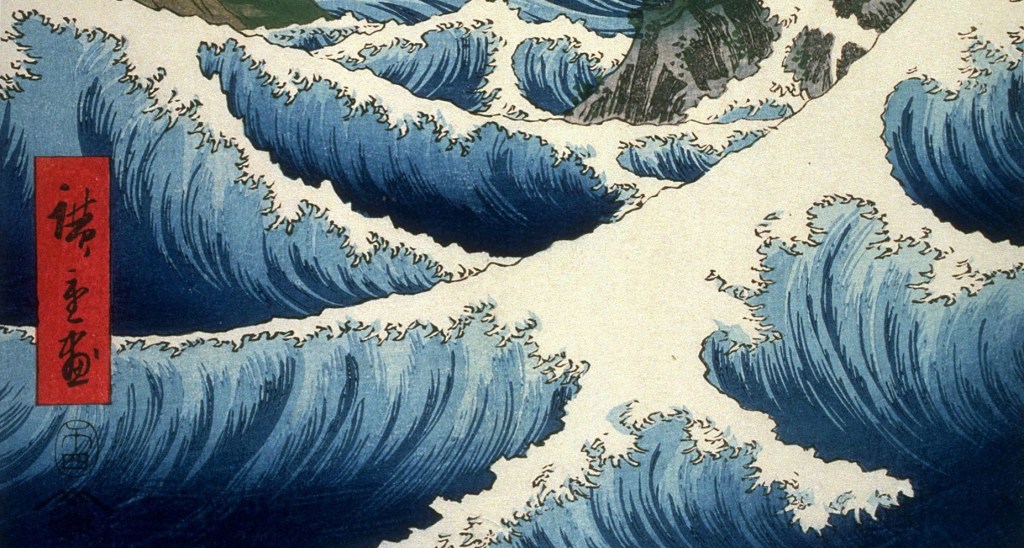
Addressing ‘Brave Questions’ is essential to the process of growth, learning, and conversion. When considering the broad sweep of action in our universe, the question of why does not seem to have a natural or readily apparent answer. Children and good people suffer at the hands of the cruel and irresponsible, who themselves are often suffering their own deep pain or disconnection. If people don’t cause someone suffering, nature herself has plenty of ways to uncaringly conspire against our comfort and rest. This year, two children who are neighbors and friends of our family were swept to sea and drown. Entire galaxies come into being and blink out of existence on a regular basis.
Through this sea of chaos we have arrived. These little members of the Great Ape family, human beings, with our rare if not singular gift of awareness combined with the happy accident of having some collective time on our hands with which to ponder. Gifts and time can be dangerous and exciting in the hands of the clever. We live in the most recent act of the Holocene era, a period of the planet Earth’s development shaped predominantly by human activity. For not the first time, human beings have organized themselves, planned and divided our labor, and harnessed the forces of nature and given ourselves power. Almost literally, we each have the power of the gods.
And yet, the question which Nature through creation and evolution has given is the nagging ‘why’. Why are we here individually and collectively?
This question betrays part of it’s cause: humanity and a whole (and each of us as individuals) has somehow gotten off track. One can observe the hummingbird and the ant who never struggle with unemployment of a lack of motivation. Their purpose of setting the world at order seems apparent to an observer. In short, it seems clear why they are here.
I propose we investigate a small portion of the Hebrew and Christian scriptures to hear the wisdom of our ancestors as they grapple with these same questions. To do so, with the time we have, I suggest the creation and apocalypse as two instructive texts to probe why we are here. One tells us how we got here, the other where we are going. I pray that understanding the purpose we may chart our course in good faith.
Imagine humanity on the cusp of the agricultural revolution. For the first time people were beginning to convert from being hunter-gatherers living in familial tribes to being farmers and laborers living in cities with governments. What would it be like to be a first generation farmer or city dweller. One would have traded the precarity of nature for the stability of science, relationship with the other for police protection, a world of spirits for a world of gods, and ultimate purpose for the promise of ultimate power.
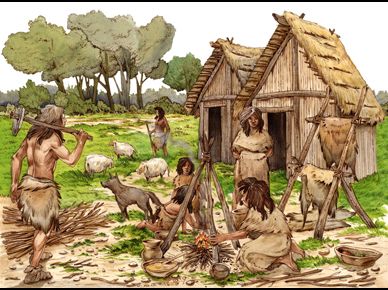
In so many ways, our creation story is formally similar to most of the creation stories of the world. These stories, our creation story, is the voice of our pre-agricultural ancestors calling out that before us people made extraction and security our primary vocations, this place was ‘good’. Sure, tragedy and human frailty still played a role in the lived experience, say these ancestors, but life was full and lived out by and large on each individual’s terms. Our creation story tells us that people were free of shame and expectation. Their progeny (us) a people who struggle with depression, addiction, mental and physical health who struggle to marshal the collective will power to ensure land, labor, and lodging for everyone even though it seems that we could.
Our ancestors must have known something about being creative. They had conquered many challenges to survive. It is telling that the first thing the God we worship does is create. God is a creator. That creation takes shape when God approaches something without form and shape and begins drawing out contrast and particularity.
By the time we faithful get to the end of the story, things are different. The Bible’s narrative is clear that we people can never again enter the innocence and precarious survival of the Garden of Eden. Instead, after the defeat of the great dragon of principalities, powers, rulers of darkness, and wickedness in high places, humanity is graced with a new heaven and new earth. People live in a new city that is distinguished not by the contrast between its inhabitance but by the unity. God no longer needs a temple (or rather, people no longer need a temple) but God lives freely in the hearts of each person. In other words, the planet itself becomes the temple and people themselves have become the bible.
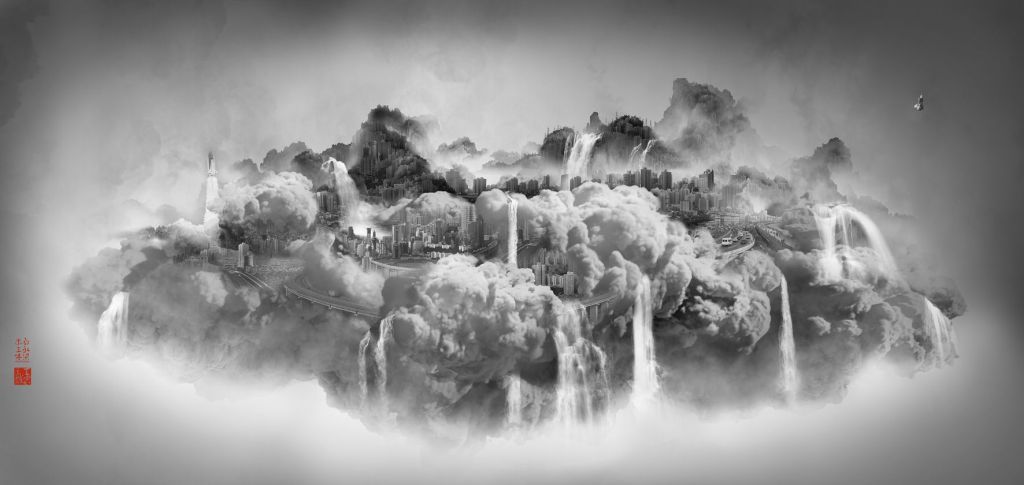
John’s Revelation captures the end of the creative cycle of humanity. In the beginning people had exited the garden and busied themselves with ‘creating’ order through contrast and differentiation. By the end, these very systems had taken on a life of their own having been driven by human greed and ambition. By the time these systems topple (or are defeated) people are ready for something new. No longer to people need to be defined, quantified, governed, paid, and compelled in this new city. Instead, it seems, the natural order has been restored.
So, I can understand the question of why are we here and why are we here? To start with the latter first, it seems that we are here due to a chain of human decisions and exercises of power. People made trade offs when an old way of life seemed less sustainable.
Why are we here? Humanity has a role to play in this creation the same as the rest of the animals. Humanity is an expression of creation. We are the conscious expression that is able to ask questions. It has been said that humanity is the universe’s expression of consciousness. We are they part of this planet that asks questions like ‘why’. Much of the business of our existence happens outside of our awareness. It could very well be that consciousness plays a larger role in keeping our cosmos together.
There is one more application of our case questions. Why are you here? What is the role you currently play in this drama of life? Our society would tell us that only people with the right age, skin color, gender, or education have a meaningful, valuable, role to play. I say that each one of us has God’s business set before us. Each of us has a task appropriate to our stage of and position in life. Are you young, learn and dream! Are you old, share wisdom! Are you rich, give it away! Are you poor, share your presence and teach us of Christ!
One thing is for certain, reason and purpose for your existence lie at your fingertips. With the help of friends and sojourners you can find this purpose in spirit.
As for each of us, our purpose is within us and our world is not waiting. Let’s jump into God’s story and discover our eternal life.
 Joshua David Kingsley
Fodder for our contemplative time,certainly. When we gather,soon I hope, we have grist for our talk. I really enjoy my time with you.
Love ya!
LikeLike
Thank you for this wonderful article. The question of why we are here has been asked through the ages. Yes, the young dream and learn.I am glad you’re in the young dreaming and learning age. It’s a wonderful time of life. May God bless you and Hannah and Trajan as you walk this time of life together. Love you, grandma Buff
LikeLike